
Bhogapuram International Airport (2026): Latest Updates, Timeline, Connectivity & Real Estate Guide
Introduction
Few infrastructure projects have the power to transform an entire region. A modern international airport is one of them. Beyond providing better air connectivity, an airport can become a catalyst for economic growth, employment, tourism, industrial development, logistics, hospitality, and long-term real estate demand.
The Bhogapuram International Airport, officially named Alluri Sitarama Raju International Airport, is one of the most significant infrastructure projects currently being developed in Andhra Pradesh. Located near Bhogapuram in Vizianagaram district, the airport is expected to play a vital role in improving connectivity for North Andhra while supporting the continued growth of Visakhapatnam and the surrounding region.
For many years, the existing Visakhapatnam Airport has served both civilian and defence operations. While it has successfully handled increasing passenger traffic, its role as a civil enclave limits future expansion. The development of a dedicated greenfield international airport at Bhogapuram is intended to provide greater operational flexibility, larger passenger capacity, improved international connectivity, and room for future expansion.
As construction has progressed, Bhogapuram has attracted growing attention from investors, homebuyers, businesses, developers, and Non-Resident Indians (NRIs). Many people want answers to questions such as:
- When will Bhogapuram International Airport become operational?
- How much construction has been completed?
- What facilities will the airport offer?
- Which areas are likely to benefit from improved connectivity?
- How could the airport influence tourism, trade, employment, and real estate?
- What should buyers know before investing near the airport?
This guide has been created to answer those questions in a clear, practical, and fact-based manner.
Unlike short news articles that focus on a single announcement, this guide brings together verified information, project history, infrastructure developments, connectivity improvements, economic implications, and investment considerations into one comprehensive resource.
Whether you are planning to purchase a residential plot, evaluating commercial opportunities, relocating to the region, or simply trying to understand the importance of this project, this guide aims to provide reliable information that helps you make informed decisions.
Throughout this article, we clearly distinguish between:
- Verified facts based on official announcements and reputable sources.
- Expert analysis that explains how major infrastructure projects typically influence regional development.
- Future possibilities, which are discussed as informed expectations rather than guaranteed outcomes.
Infrastructure projects of this scale evolve over time. Construction milestones, regulatory approvals, airline schedules, and supporting infrastructure can change. For that reason, this guide is intended to be updated periodically so readers always have access to current information.
Our objective is simple: to provide one of the most complete, balanced, and useful guides available on Bhogapuram International Airport while helping readers understand both the opportunities and the practical considerations associated with this landmark project.
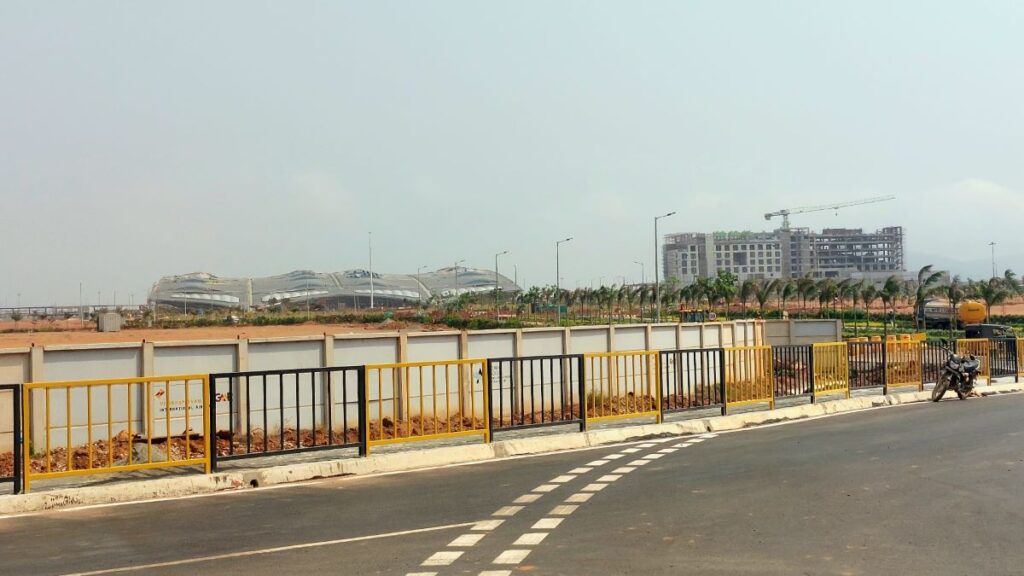
Table of Contents
ToggleQuick Facts at a Glance
| Feature | Details |
|---|---|
| Official Name | Alluri Sitarama Raju International Airport |
| Common Name | Bhogapuram International Airport |
| Location | Bhogapuram, Vizianagaram District, Andhra Pradesh |
| Airport Type | Greenfield International Airport |
| Developer | GMR Visakhapatnam International Airport Limited (GVIAL) |
| Government Partner | Andhra Pradesh Airports Development Corporation (APADCL) |
| Development Model | Public-Private Partnership (PPP) |
| Approximate Runway Length | 3,800 metres |
| Planned Phase 1 Capacity | Around 6 million passengers per year |
| Purpose | Domestic and International Passenger & Cargo Operations |
| Beneficiary Region | North Andhra, including Visakhapatnam, Vizianagaram and Srikakulam |
Why This Airport Matters
Bhogapuram International Airport is more than a transportation project. It has the potential to become a major economic engine for North Andhra by improving regional connectivity and supporting long-term development.
Some of the expected benefits include:
- Better domestic and international air connectivity.
- Improved access for business travellers and tourists.
- Increased opportunities for logistics and cargo movement.
- Support for hospitality, retail and commercial development.
- Employment generation during construction and operations.
- Better infrastructure around the airport corridor.
- Enhanced regional competitiveness for attracting investment.
While these outcomes are commonly associated with major airport developments, the pace and extent of future growth will depend on government policies, infrastructure execution, market demand, and private-sector investment.
Who Should Read This Guide?
This guide has been written for:
- Plot buyers looking for long-term investment opportunities.
- First-time land buyers seeking reliable information.
- NRIs exploring investment options in North Andhra.
- Business owners evaluating future commercial locations.
- Property investors comparing growth corridors.
- Homebuyers planning to relocate closer to emerging infrastructure.
- Students, researchers and professionals interested in regional development.
Whether your interest is aviation, infrastructure or real estate, this guide is designed to answer both basic and advanced questions in one place.
What You’ll Learn
By the end of this guide, you will understand:
- The latest construction status and project updates.
- The official development timeline.
- Airport specifications and planned facilities.
- Road, rail and regional connectivity.
- Major government infrastructure projects around the airport.
- The airport’s likely impact on tourism, trade and employment.
- Real estate trends and investment considerations.
- The best locations to explore around the airport corridor.
- Common myths and misconceptions.
- Practical tips for buying land responsibly.
Our Research Approach
To ensure accuracy, this guide is based primarily on information published by official agencies and reputable organizations, including:
- GMR Visakhapatnam International Airport Limited (GVIAL)
- Andhra Pradesh Airports Development Corporation (APADCL)
- Airports Authority of India (AAI)
- Ministry of Civil Aviation
- Government of Andhra Pradesh
Where recent developments are discussed, they are supported by reporting from established national news publications. Because infrastructure projects continue to evolve, readers should verify the latest operational announcements and regulatory approvals through official sources.
About This Guide
This article is intended to be an evergreen resource. It will be updated periodically to reflect important project milestones, infrastructure developments, and significant government announcements.
Rather than focusing only on construction updates, it explains the broader significance of the airport, including its potential role in regional connectivity, economic development and the evolving real estate landscape.
Looking for Investment Opportunities Near Bhogapuram?
If you are exploring VMRDA-approved plots or want to understand which locations may benefit from ongoing infrastructure development, continue reading this guide. In the upcoming sections, we explain how the airport fits into the wider growth story of North Andhra and discuss important factors that every property buyer should consider before making an investment decision.
Next Section: Bhogapuram Airport Latest Updates (2026) – We’ll examine the latest construction progress, important milestones, operational readiness, and what they mean for travellers, businesses, and investors
Bhogapuram Airport Latest Updates (2026)
If you’ve searched for Bhogapuram International Airport, chances are you’re looking for the latest construction status, opening date, or operational updates. This section provides a snapshot of the airport’s current progress based on official announcements and recent verified reports.
Quick Update (July 2026):
Bhogapuram International Airport has reached the final stage before commercial operations. The airport has received its aerodrome licence, major construction has been completed, operational preparations are underway, and the Government of Andhra Pradesh has been making arrangements for its inauguration. Reports indicate that commercial operations are planned to begin in August 2026, subject to the final inauguration schedule and airline operational readiness.
Current Construction Status
The airport has progressed from a construction project to an operationally ready aviation facility.
Major milestones achieved include:
- Passenger terminal construction substantially completed.
- Approximately 3,800-metre runway completed and tested.
- Air Traffic Control (ATC) tower operational.
- Taxiways and apron infrastructure completed.
- Internal roads, utility services, and landscaping largely finished.
- Passenger processing systems installed.
- Air navigation and communication systems commissioned.
The focus has now shifted from heavy construction to operational readiness, testing, staff deployment, airline coordination, and final passenger-service preparations.
Aerodrome Licence – A Major Milestone
One of the most significant achievements in 2026 was the granting of the Aerodrome Licence.
This licence confirms that the airport has met the regulatory safety and operational requirements necessary for commercial airport operations.
Receiving this licence is a critical milestone because it demonstrates that:
- Runway infrastructure complies with aviation standards.
- Safety systems are in place.
- Airside operations meet regulatory requirements.
- The airport can move towards commercial passenger services after completing the remaining operational formalities.
Why this matters:
Many airport projects complete construction long before commercial operations begin. The aerodrome licence is one of the final regulatory approvals that bridges the gap between construction and passenger service.
Validation Flight Successfully Completed
Another landmark achievement was the successful validation flight conducted in January 2026.
A validation flight is not a commercial passenger flight. Instead, it is a technical assessment carried out to verify that the airport is ready for safe flight operations.
During the validation process, aviation authorities evaluate:
- Runway performance
- Instrument approach procedures
- Navigation systems
- Air Traffic Control coordination
- Lighting systems
- Airspace procedures
- Overall operational readiness
The successful completion of this validation flight confirmed that the airport had crossed an important technical milestone on the path to commercial operations.
Operational Readiness
With major construction complete, current activities include:
- Airline coordination
- Passenger terminal readiness
- Security arrangements
- Ground handling preparations
- Staff deployment
- Final testing of passenger facilities
- Operational rehearsals
- Integration of airport services
These steps are essential to ensure that passengers experience safe and efficient airport operations from day one.
Expected Opening and Commercial Operations
According to recent announcements and media reports, Bhogapuram International Airport is expected to be inaugurated on 1 August 2026, with commercial passenger operations planned around the same period, subject to final government scheduling and airline readiness.
As with any major infrastructure project, operational timelines may change because of regulatory, administrative, or airline-related factors. Travellers should confirm flight schedules directly with airlines once bookings are opened.
Preparations for Inauguration
Recent reports indicate that government departments, airport authorities, and the developer have been working on a war footing to complete the final arrangements for the inauguration.
Preparations include:
- Final inspection of airport facilities.
- Coordination among aviation, security, and local administration.
- Traffic management plans.
- Passenger access arrangements.
- Public infrastructure readiness.
- Event planning for the official inauguration.
Passenger Experience
Once operational, travellers can expect a modern airport designed to deliver a smoother travel experience through features such as:
- Spacious passenger terminal
- Digital passenger processing
- Modern baggage handling systems
- Enhanced accessibility
- Energy-efficient building design
- Improved passenger circulation
- Facilities designed for future expansion
These features are intended to provide a better travel experience while supporting the long-term growth of passenger traffic in North Andhra.
Why These Updates Matter
The transition from construction to operations is important for more than just air travel.
A functioning international airport can influence:
- Regional connectivity
- Tourism
- Trade and exports
- Logistics and warehousing
- Hospitality and hotels
- Commercial investment
- Employment generation
- Business expansion
- Real estate demand
While the extent of these benefits will depend on broader economic conditions and future investments, airports often serve as important catalysts for regional development over the long term.
Latest Milestones at a Glance
| Milestone | Status |
|---|---|
| Main construction | Substantially completed |
| Runway | Completed and tested |
| Passenger terminal | Ready for operations |
| Validation flight | Successfully completed |
| Aerodrome Licence | Issued |
| Operational readiness | Final stage |
| Inauguration preparations | Underway |
| Planned commercial launch | August 2026 (subject to final scheduling) |
Investor Insight
For property buyers and investors, the airport has now entered a different phase.
Earlier, much of the discussion centred on whether the project would be completed. Today, the focus has shifted to how the airport will influence infrastructure, connectivity, tourism, business activity, and land use in the surrounding region.
However, it is important to remember that an airport alone does not guarantee property appreciation. Factors such as location, VMRDA approval, road connectivity, surrounding infrastructure, legal due diligence, and long-term urban planning remain critical when evaluating any real estate investment.
What’s Next?
Now that we’ve looked at the latest developments, the next section explains what Bhogapuram International Airport is, why it is being built, how it differs from the existing Visakhapatnam Airport, and why it is considered one of the most important infrastructure projects in North Andhra.
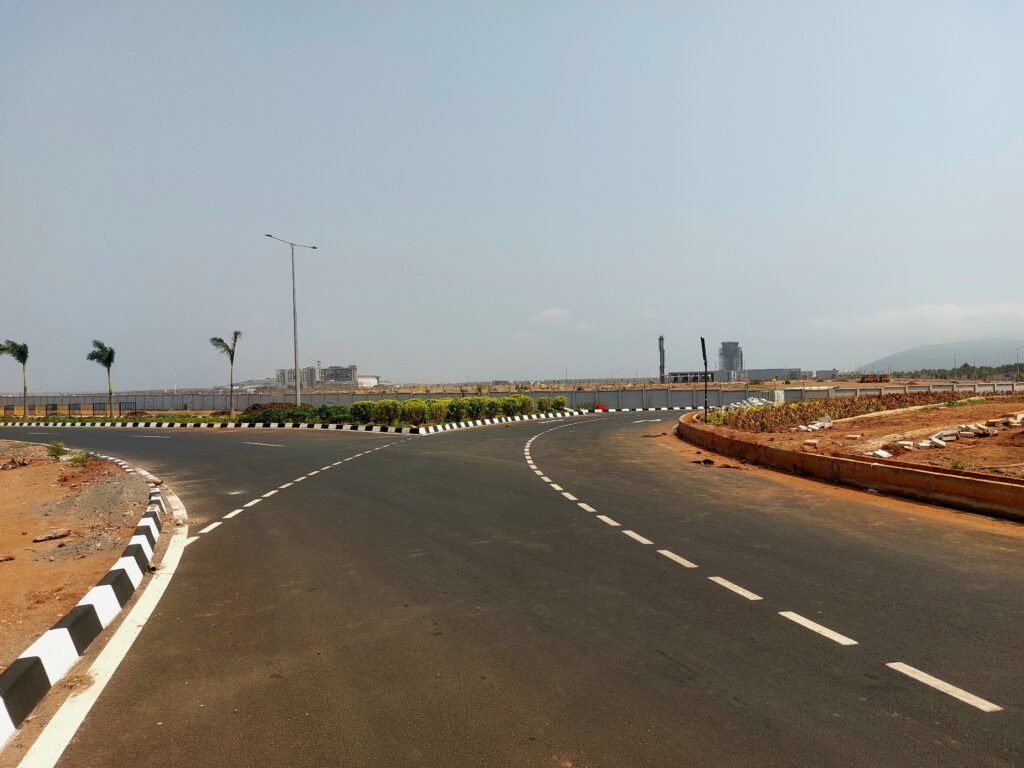
What is Bhogapuram International Airport?
Bhogapuram International Airport, officially named Alluri Sitarama Raju International Airport, is a new greenfield international airport being developed at Bhogapuram in the Vizianagaram district of Andhra Pradesh.
Designed as a world-class aviation hub, the airport aims to strengthen domestic and international connectivity for North Andhra, serving the growing travel and business needs of Visakhapatnam, Vizianagaram, Srikakulam, and neighbouring regions.
Unlike an expansion of an existing airport, Bhogapuram is being developed on a completely new site. This allows planners to design modern infrastructure from the ground up, including a longer runway, a spacious passenger terminal, advanced navigation systems, dedicated cargo facilities, and sufficient land for future expansion.
The project is being developed by GMR Visakhapatnam International Airport Limited (GVIAL) under a Public-Private Partnership (PPP) with the Andhra Pradesh Airports Development Corporation (APADCL). The airport has been planned not only to improve passenger travel but also to support tourism, trade, logistics, and long-term regional economic development.
Why is a New International Airport Needed?
Many people wonder why a completely new airport was planned when Visakhapatnam already has an airport.
The answer lies in the limitations of the existing Visakhapatnam Airport.
Although Visakhapatnam Airport has served the region well for decades, it operates as a civil enclave within a naval airbase. Civilian and defence operations share the same airfield, which limits expansion possibilities and operational flexibility.
As passenger traffic increased over the years, the need for a larger, purpose-built airport became more evident.
A dedicated greenfield airport at Bhogapuram provides several long-term advantages:
- Greater capacity for future passenger growth.
- Improved domestic and international connectivity.
- Space for cargo operations.
- Scope for aviation-related industries.
- Better infrastructure planning.
- Modern passenger facilities.
- Room for future terminal expansion.
Rather than simply replacing the existing airport, Bhogapuram International Airport is expected to enhance the region’s aviation infrastructure and support future growth.
What Does “Greenfield Airport” Mean?
A greenfield airport is an airport built entirely on undeveloped land instead of expanding or modifying an existing airport.
This approach offers several advantages:
- Modern airport planning from the beginning.
- Better runway orientation.
- Efficient passenger movement.
- Future expansion without major operational disruptions.
- Improved road connectivity.
- Dedicated cargo and commercial zones.
- Integration with surrounding urban development.
Examples of successful greenfield airports in India include:
- Kempegowda International Airport, Bengaluru
- Rajiv Gandhi International Airport, Hyderabad
- Mopa International Airport, Goa
- Noida International Airport (under development)
Bhogapuram International Airport follows the same long-term planning philosophy.
Official Name of the Airport
The airport has been officially named Alluri Sitarama Raju International Airport in honour of the legendary freedom fighter Alluri Sitarama Raju, who led the Rampa Rebellion against British rule in the early 20th century.
However, most people continue to refer to the project as Bhogapuram International Airport, especially in news reports, government discussions, real estate conversations, and online searches.
For this reason, the term “Bhogapuram International Airport” remains the primary keyword throughout this guide while also mentioning the official name where appropriate.
Where is Bhogapuram International Airport Located?
The airport is located near Bhogapuram in the Vizianagaram district of Andhra Pradesh.
Its strategic location provides convenient access to several important urban centres, including:
- Visakhapatnam
- Vizianagaram
- Bheemunipatnam (Bheemili)
- Anandapuram
- Tagarapuvalasa
- Srikakulam
The airport also benefits from its proximity to National Highway 16 (NH-16), one of India’s busiest highway corridors connecting Chennai, Visakhapatnam, Bhubaneswar, Kolkata, and other major cities along the east coast.
This strategic location makes it well positioned to support passenger travel, cargo movement, and regional economic integration.
Learn more about the advantages of investing in the airport corridor in our detailed guide on Plots in Bhogapuram.
Key Objectives of the Project
The airport has been planned with several long-term objectives:
Improve Regional Connectivity
Provide better domestic and international air services for North Andhra.
Support Tourism
Improve access to popular destinations such as:
- Visakhapatnam
- Bheemili Beach
- Araku Valley
- Borra Caves
- Buddhist heritage sites
- Coastal tourism destinations
Promote Trade and Commerce
Enable faster movement of goods and strengthen the region’s role in domestic and international trade.
Encourage Investment
Modern transport infrastructure often plays an important role in attracting industries, commercial establishments, hospitality projects, and business investments.
Create Employment
The airport is expected to generate direct employment through airport operations and indirect employment in sectors such as hospitality, logistics, transportation, retail, maintenance, and tourism.
Bhogapuram Airport vs Visakhapatnam Airport
| Feature | Bhogapuram International Airport | Existing Visakhapatnam Airport |
|---|---|---|
| Airport Type | Greenfield International Airport | Civil Enclave Airport |
| Location | Bhogapuram | Visakhapatnam |
| Operations | Dedicated civilian airport | Shared civilian and naval operations |
| Expansion Potential | High | Limited |
| Future Growth | Planned in phases | Constrained by available land |
| Cargo Opportunities | Significant long-term potential | Limited by existing infrastructure |
| Master Planning | Designed for future expansion | Expansion constraints due to location |
Note: This comparison is intended to explain planning and infrastructure differences rather than suggest that one airport is “better” than the other.
Why This Airport Matters Beyond Aviation
The significance of Bhogapuram International Airport extends far beyond air travel.
Major airports often become centres of economic activity because they improve accessibility and encourage complementary investments.
Over time, airports can influence:
- Tourism growth
- Hospitality development
- Warehousing and logistics
- Retail expansion
- Commercial offices
- Industrial investment
- Educational institutions
- Healthcare facilities
- Residential demand
The extent and pace of these changes depend on multiple factors, including government policies, infrastructure execution, private investment, and overall economic conditions. The airport is an important catalyst, but it is one part of a broader development ecosystem.
Did You Know?
Bhogapuram International Airport has been planned with future expansion in mind. By developing the airport on a greenfield site, planners have created opportunities for additional passenger facilities, cargo infrastructure, and aviation-related services as demand grows over the coming decades.
Expert Insight
Around the world, major airports often act as anchors for regional development. However, airports alone do not transform economies. Their greatest impact comes when they are supported by well-planned roads, public infrastructure, tourism initiatives, industrial investment, and sound urban planning.
Bhogapuram International Airport has the potential to play this role for North Andhra, provided that supporting infrastructure and planned development continue to progress alongside airport operations.
Next Section
Now that we’ve understood what Bhogapuram International Airport is and why it is being developed, let’s look at the complete project timeline, from the earliest proposal and approvals to construction milestones, validation flights, and the expected commencement of commercial operations.
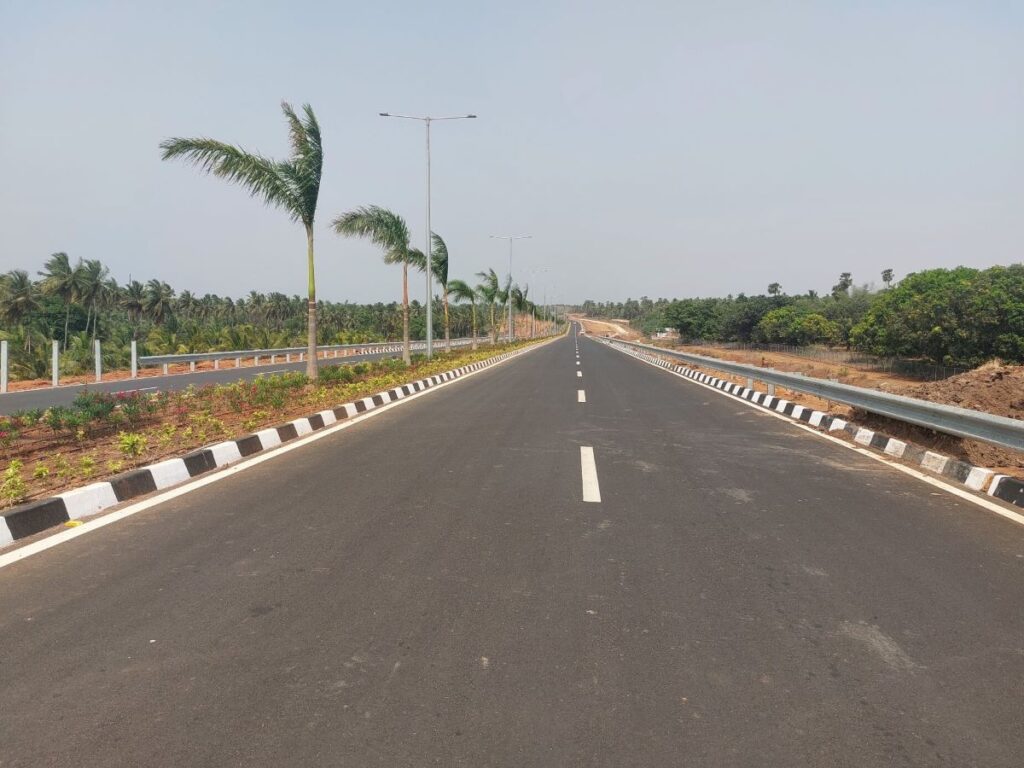
Complete Timeline of Bhogapuram International Airport
Understanding the journey of Bhogapuram International Airport provides valuable insight into the scale and significance of this landmark infrastructure project. Like most major greenfield airports, the project has progressed through multiple stages, including planning, approvals, land acquisition, environmental clearances, developer selection, construction, regulatory testing, and operational readiness.
The timeline below highlights the major milestones that have shaped the development of the airport.
Bhogapuram International Airport Timeline
| Year | Milestone | Why It Matters |
|---|---|---|
| 2015 | Site received technical approval from the Airports Authority of India (AAI). | Confirmed the suitability of Bhogapuram for a new international airport. |
| 2016 | Andhra Pradesh Government approved development under the Public-Private Partnership (PPP) model. | Established the framework for private investment and long-term airport development. |
| 2017 | Environmental Clearance (EC) granted. | A major regulatory approval allowing the project to move forward. |
| 2018–2019 | Land acquisition and preliminary planning activities progressed. | Enabled preparation for future construction. |
| 2019 | Foundation stone laid. | Marked the official launch of the project. |
| 2020–2022 | Progress slowed because of administrative processes and the COVID-19 pandemic. | Large infrastructure projects across India experienced delays during this period. |
| 2023 | Construction restarted at full scale under GMR Visakhapatnam International Airport Limited (GVIAL). | Transition from planning to active construction. |
| 2023 | Larsen & Toubro (L&T) appointed as the principal construction contractor. | One of India's leading infrastructure companies began executing the civil works. |
| 2024 | Airport officially named Alluri Sitarama Raju International Airport. | Honoured the legendary freedom fighter while retaining Bhogapuram as the commonly used name. |
| Jan-26 | Successful validation flight conducted. | Confirmed the runway, navigation systems and operational procedures were functioning satisfactorily. |
| Mid-2026 | Major construction substantially completed. | Passenger terminal, runway, ATC tower and supporting infrastructure reached the final stages. |
| Jul-26 | Aerodrome Licence issued by the aviation regulator. | One of the final approvals before commercial operations. |
| August 2026 (planned) | Inauguration and commencement of commercial operations (subject to final government scheduling and airline readiness). | Marks the transition from construction to passenger service. |
Timeline Explained
Planning Stage (2015–2017)
Every major airport begins with years of planning before construction starts.
During this period, authorities evaluated multiple factors, including:
- Technical feasibility
- Airspace availability
- Environmental impact
- Land suitability
- Future passenger demand
- Regional development needs
Receiving technical approval and environmental clearance laid the foundation for moving the project into the implementation phase.
Project Preparation (2018–2019)
With the key approvals in place, attention shifted to:
- Land acquisition
- Project planning
- Design work
- Financial structuring
- Selection of the development model
The Government of Andhra Pradesh chose to develop the airport through a Public-Private Partnership (PPP), combining public oversight with private-sector expertise.
Construction Phase (2023 Onwards)
Although the project experienced delays during earlier years, large-scale construction gained momentum after GMR took charge of implementation.
This phase included:
- Earthworks
- Runway construction
- Taxiways
- Passenger terminal
- Air Traffic Control (ATC) tower
- Internal roads
- Utility networks
- Drainage systems
- Electrical infrastructure
- Passenger service facilities
Construction progressed in carefully planned stages to meet aviation safety standards.
Operational Readiness (2026)
By 2026, the project entered its final phase.
Key achievements included:
- Successful validation flight
- Installation of navigation systems
- Passenger terminal readiness
- Operational testing
- Regulatory inspections
- Aerodrome Licence
- Inauguration preparations
At this stage, the emphasis shifted from construction activities to preparing the airport for commercial passenger operations.
Major Milestones at a Glance
Infrastructure
- Runway completed
- Taxiways completed
- Passenger terminal substantially completed
- ATC tower operational
- Airside infrastructure completed
Regulatory Progress
- Environmental Clearance obtained
- Validation flight completed
- Aerodrome Licence issued
- Final operational preparations underway
Development Progress
- Public-Private Partnership established
- GMR appointed as developer
- L&T appointed as construction contractor
- Airport officially named
Why the Timeline Matters
The timeline tells a broader story than construction alone.
Each milestone represents progress through one of the many stages required to deliver a modern international airport, including:
- Planning
- Government approvals
- Environmental compliance
- Land development
- Engineering
- Aviation safety
- Operational readiness
Understanding this sequence helps readers appreciate why projects of this scale take several years to complete and why each approval is important before commercial flights can begin.
Expert Insight
Large international airports are among the most complex infrastructure projects undertaken by any government. Delays can occur because of land acquisition, environmental approvals, financing, engineering challenges, or unforeseen events such as the COVID-19 pandemic.
Rather than judging a project solely by its original schedule, it is more useful to evaluate its current stage of completion, regulatory approvals, and operational readiness. By mid-2026, Bhogapuram International Airport had progressed from a construction project to a facility preparing for commercial operations, representing a significant milestone in the development of North Andhra’s aviation infrastructure.
Investor Perspective
For investors, the timeline is valuable because it demonstrates that the project has moved through the highest-risk stages of planning and construction.
However, investment decisions should never be based on the airport alone. Buyers should also evaluate:
- VMRDA approval
- Legal title
- Road connectivity
- Surrounding infrastructure
- Developer credibility
- Long-term urban planning
- Personal investment objectives
A well-informed investment considers the complete development ecosystem rather than a single infrastructure project.
Readers interested in understanding how the airport could influence nearby investment corridors can continue with our guides on Why Invest in Vizag, Plots in Bhogapuram, and VMRDA Approved Plots in Vizag.
Key Takeaways
- Bhogapuram International Airport has progressed through planning, approvals, construction, and operational readiness over more than a decade.
- The project is being developed by GMR Visakhapatnam International Airport Limited (GVIAL) under a PPP model with the Government of Andhra Pradesh.
- Major milestones such as the validation flight and aerodrome licence indicate that the airport has entered its final pre-operational stage.
- The timeline illustrates the scale and complexity of developing a modern international airport and provides context for understanding its future role in regional growth.
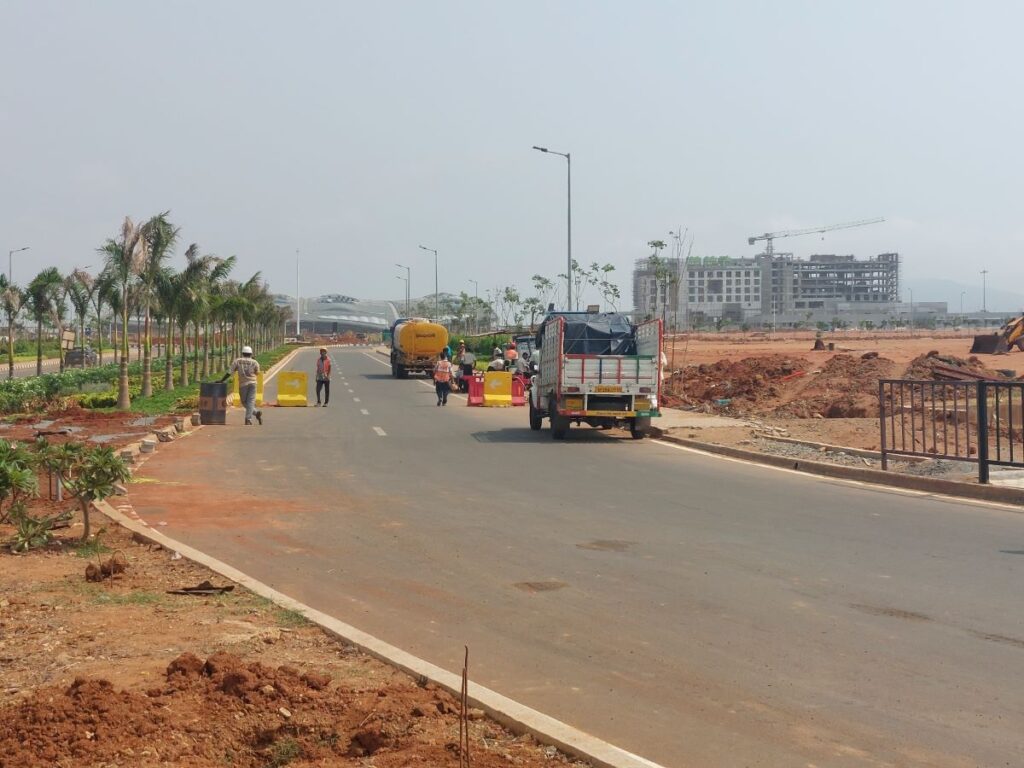
Airport Specifications: What Makes Bhogapuram International Airport a Modern Aviation Hub?
An international airport is far more than a runway and a terminal building. It is a complex ecosystem that combines aviation engineering, passenger experience, safety systems, technology, cargo operations, sustainability, and future expansion planning.
Bhogapuram International Airport has been designed as a next-generation greenfield airport capable of serving North Andhra for decades. Instead of expanding an older airport with physical constraints, planners have developed a purpose-built aviation hub that can grow in phases as passenger demand increases.
Airport Specifications at a Glance
| Feature | Specification |
|---|---|
| Official Name | Alluri Sitarama Raju International Airport |
| Common Name | Bhogapuram International Airport |
| Airport Type | Greenfield International Airport |
| Developer | GMR Visakhapatnam International Airport Limited (GVIAL) |
| Government Partner | Andhra Pradesh Airports Development Corporation (APADCL) |
| Phase 1 Project Cost | Approximately ₹4,592 crore |
| Total Land Area | About 2,203 acres |
| Runway Length | 3,800 metres |
| Runway Category | CAT-I capable runway |
| Passenger Capacity (Phase 1) | Around 6 million passengers annually |
| Passenger Terminal Area | Approximately 62,500 sq. metres |
| Cargo Terminal | Approximately 5,000 sq. metres |
| Development Model | Public-Private Partnership (PPP) |
Specifications are based on Phase 1 of the project and may evolve with future expansion.
Runway Designed for International Operations
One of the most important features of any airport is its runway.
Bhogapuram International Airport has been constructed with a 3,800-metre runway, allowing it to accommodate a wide range of modern commercial aircraft, including many long-haul international aircraft. The runway has been designed to meet international aviation standards and is equipped with a Category-I Instrument Landing System (CAT-I ILS) to support safe operations during reduced visibility conditions.
Benefits of the runway
- Supports domestic and international operations.
- Suitable for many wide-body aircraft.
- Enhances operational efficiency.
- Provides flexibility for future airline expansion.
- Improves the airport’s long-term growth potential.
Modern Passenger Terminal
The passenger terminal has been designed to offer a modern and comfortable travel experience.
With a built-up area of approximately 62,500 square metres, the Phase 1 terminal is expected to handle around 6 million passengers per year. The layout has been planned to improve passenger flow while allowing additional expansion as demand increases.
Expected passenger facilities
- Spacious check-in halls
- Security screening areas
- Domestic and international passenger processing
- Comfortable waiting lounges
- Retail and food outlets
- Modern baggage handling systems
- Passenger information displays
- Accessibility features for persons with disabilities
The emphasis is on creating a smoother and more efficient airport experience while maintaining flexibility for future upgrades.
Cargo Terminal
Cargo infrastructure is an important part of the airport’s long-term vision.
Phase 1 includes a cargo terminal of approximately 5,000 square metres, intended to support freight movement for industries, exporters, agriculture, seafood, pharmaceuticals, and other businesses in North Andhra.
A dedicated cargo facility can help:
- Reduce transportation time.
- Improve export efficiency.
- Strengthen logistics networks.
- Support industrial and commercial growth.
- Encourage investment in warehousing and supply-chain infrastructure.
Air Traffic Control and Airside Infrastructure
Safe aircraft operations depend on sophisticated airside systems.
Bhogapuram International Airport includes:
- Air Traffic Control (ATC) tower
- Taxiways
- Aircraft parking aprons
- Airfield lighting
- Navigation aids
- Communication systems
- Emergency response infrastructure
- Fire and rescue services
Together, these systems enable safe aircraft movement both on the ground and in the surrounding airspace. Operational readiness has been demonstrated through successful validation flights and regulatory approvals.
Smart Airport Features
The airport has been planned as a modern aviation facility incorporating digital technologies that improve passenger convenience and operational efficiency.
Expected smart features include:
- DigiYatra-ready passenger processing
- Digital check-in systems
- Automated baggage handling
- Real-time flight information displays
- Advanced security systems
- Integrated airport management technologies
- Energy-efficient building management systems
As airlines and airport operators expand services, additional digital capabilities may be introduced over time.
Sustainability and Green Design
Modern airports are increasingly designed with sustainability in mind, and Bhogapuram International Airport reflects this trend.
The project incorporates features intended to improve operational efficiency while reducing environmental impact, including:
- Energy-efficient building design
- Optimised natural lighting
- Water management systems
- Landscaping and green spaces
- Efficient utility planning
Specific sustainability measures may continue to evolve as additional facilities are commissioned and future phases are developed.
Phase 1 Capacity and Future Expansion
The airport has not been designed only for today’s passenger demand.
Its master plan allows phased expansion as traffic grows over the coming years.
Phase 1
- Approximately 6 million passengers annually
Future Vision
Future phases can accommodate increasing passenger traffic through additional infrastructure, terminal expansion, and supporting aviation facilities as demand requires.
This phased approach allows the airport to grow efficiently without requiring major redesigns.
Why Future Expansion Matters
Planning for expansion from the beginning offers several long-term advantages:
- Better passenger experience during growth.
- Lower disruption compared with retrofitting older airports.
- Ability to attract more domestic and international airlines.
- Support for increasing tourism and business travel.
- Greater flexibility for cargo and aviation-related services.
For a region expected to witness continued infrastructure development, this flexibility is an important strategic advantage.
Airport Specifications Compared with Traditional Airports
| Feature | Bhogapuram International Airport | Older Constrained Airports |
|---|---|---|
| Development | Greenfield | Brownfield / Limited expansion |
| Expansion Planning | Built into the master plan | Often restricted |
| Passenger Flow | Modern layout | May require retrofitting |
| Future Capacity | Planned in phases | Limited by existing infrastructure |
| Cargo Growth | Dedicated planning | Often constrained |
| Technology Integration | Designed for modern systems | Incremental upgrades |
Did You Know?
The runway at Bhogapuram International Airport is approximately 3.8 kilometres long, making it suitable for handling many modern wide-body commercial aircraft and positioning the airport for long-term domestic and international operations.
Expert Insight
Modern airports are no longer viewed simply as transportation facilities. They increasingly function as economic gateways that support tourism, trade, logistics, business travel, and regional development.
Bhogapuram International Airport has been planned with this broader role in mind. While the airport itself is an important asset, its long-term success will also depend on complementary investments in road connectivity, logistics, hospitality, industrial development, and urban planning.
What These Specifications Mean for Travellers
For passengers, the planned infrastructure translates into:
- Better travel comfort.
- Faster passenger processing.
- Improved baggage handling.
- Enhanced safety systems.
- Capacity to accommodate future travel demand.
- Potential for expanded domestic and international connectivity.
What These Specifications Mean for Investors
Although airport infrastructure alone does not determine property values, a modern airport with planned future expansion can contribute to improved regional accessibility and attract complementary investments over time.
Investors evaluating opportunities near the airport should consider the airport’s specifications alongside other factors such as:
- VMRDA approvals
- Road connectivity
- Surrounding infrastructure
- Government development plans
- Legal due diligence
- Long-term demand fundamentals
Key Takeaways
- Bhogapuram International Airport has been designed as a modern greenfield international airport with long-term expansion in mind.
- Phase 1 includes a 3,800-metre CAT-I runway, a 62,500 sq. metre passenger terminal, and a 5,000 sq. metre cargo terminal.
- The airport is planned to handle around 6 million passengers annually in its first phase, with room for future growth.
- Smart technologies, digital passenger processing, and sustainability features aim to improve operational efficiency and the traveller experience.
- Beyond aviation, these specifications provide the physical foundation for future tourism, trade, logistics, and economic development across North Andhra.
Bhogapuram International Airport Location Map
Location, Strategic Importance & Connectivity of Bhogapuram International Airport
The success of an international airport depends not only on its infrastructure but also on where it is located. Bhogapuram International Airport was strategically planned to serve a much larger region than just Visakhapatnam city. Its location enables it to act as the primary aviation gateway for North Andhra, connecting the districts of Visakhapatnam, Vizianagaram, Srikakulam, and neighbouring regions.
Unlike the existing Visakhapatnam Airport, which operates within a naval airbase and has limited scope for expansion, Bhogapuram provides the land and accessibility needed for long-term growth.
Where is Bhogapuram International Airport Located?
Bhogapuram International Airport is situated in Bhogapuram Mandal of Vizianagaram District, Andhra Pradesh, close to the border of Visakhapatnam District.
The airport enjoys a strategic location on the eastern coastal corridor of India, with direct access to National Highway 16 (NH-16), one of the country’s most important highway networks connecting Chennai, Visakhapatnam, Bhubaneswar and Kolkata. The airport site lies approximately 1.5 km from NH-16, ensuring excellent road accessibility.
Why Was Bhogapuram Chosen?
Selecting the location of an international airport involves years of technical studies and planning.
Bhogapuram was considered suitable because it offers:
- Large contiguous land for future expansion.
- Direct access to NH-16.
- Strategic location between Visakhapatnam and Vizianagaram.
- Ability to serve the wider North Andhra region.
- Space for Aerocity, logistics parks and commercial development.
- Fewer operational constraints than the existing airport.
This combination makes Bhogapuram an ideal location for a modern greenfield airport with long-term expansion potential.
Strategic Position in North Andhra
One of the airport’s greatest strengths is its ability to serve multiple districts from a single location.
Instead of functioning as a city airport alone, Bhogapuram has been planned as a regional aviation hub.
Primary Catchment Area
- Visakhapatnam
- Vizianagaram
- Srikakulam
Secondary Catchment Area
- Anakapalli
- Araku Valley
- Bheemunipatnam (Bheemili)
- Anandapuram
- Tagarapuvalasa
- Coastal tourism destinations
This wider catchment area is expected to support both passenger traffic and cargo movement over the coming years.
Connectivity Through National Highway 16
National Highway 16 (formerly NH-5) is one of India’s busiest transport corridors and forms part of the Golden Quadrilateral and the Asian Highway network.
For Bhogapuram International Airport, NH-16 provides several advantages:
- Fast access from Visakhapatnam.
- Convenient connection to Vizianagaram and Srikakulam.
- Efficient movement of passengers and cargo.
- Better connectivity for tourism and business travel.
To further improve accessibility, the Andhra Pradesh Government is implementing multiple new road projects, including additional NH-16 links and approach roads to reduce travel times from Visakhapatnam and surrounding areas.
Approximate Distance from Major Locations
| Location | Approximate Distance |
|---|---|
| Visakhapatnam City Centre | 45 km |
| Visakhapatnam Airport (Existing) | 55 km |
| Bheemunipatnam (Bheemili) | 25 km |
| Anandapuram | 24 km |
| Tagarapuvalasa | 18 km |
| Vizianagaram | 25 km |
| Srikakulam | 65 km |
| Vizag Port | 52 km |
Distances are approximate and may vary depending on the chosen route and exact starting point.
Road Connectivity
The airport has been planned with a strong focus on road accessibility.
Key road links include:
- National Highway 16.
- Dedicated airport approach roads.
- Planned widening of connecting corridors.
- Proposed beach corridor improvements.
- Regional road upgrades connecting nearby towns.
These projects aim to improve travel efficiency and support increasing passenger traffic after the airport becomes operational.
Public Transport Connectivity
As commercial operations commence, passengers are expected to have multiple transport options.
These include:
- Airport taxi services.
- App-based cab services.
- APSRTC bus connectivity.
- Newly introduced electric buses aligned with airport operations.
- Private vehicle access with designated parking.
Public transport services are expected to expand as passenger volumes grow.
Railway Connectivity
Although the airport does not have a dedicated railway station, it is well connected through nearby stations.
Important rail connections include:
- Vizianagaram Junction.
- Visakhapatnam Junction.
- Simhachalam Station.
These stations provide convenient access to the airport through road transport.
Sea Connectivity
The airport’s proximity to Visakhapatnam Port, one of India’s major ports on the east coast, enhances multimodal connectivity.
This combination of airport, highway and seaport infrastructure supports:
- Export-oriented industries.
- Logistics.
- Manufacturing.
- Warehousing.
- International trade.
Such integrated connectivity is an important advantage for regional economic development.
The Airport Influence Zone
Large airports often stimulate growth in surrounding areas by improving accessibility and attracting investment.
For Bhogapuram International Airport, the broader influence zone is expected to include:
- Bhogapuram
- Bheemunipatnam
- Thagarapuvalasa
- Anandapuram
- Madhurawada
- Vizianagaram
The pace and scale of development will depend on infrastructure execution, planning policies, and market demand, but improved connectivity generally increases the attractiveness of these corridors over time.
Why Connectivity Matters for Travellers
Good connectivity means more than shorter travel times.
It can also provide:
- Easier airport access.
- Better airline operations.
- Faster cargo movement.
- Improved tourism potential.
- Greater convenience for business travellers.
- Enhanced regional integration.
These benefits strengthen the airport’s role as a transportation hub for North Andhra.
What This Means for Property Buyers
Infrastructure projects like highways, airports and approach roads often improve the long-term appeal of surrounding regions.
However, buying property should never be based solely on the presence of an airport.
Before making an investment, buyers should evaluate:
- VMRDA approval status.
- Legal title and documentation.
- Access roads.
- Civic infrastructure.
- Developer reputation.
- Personal investment goals.
Considering these factors alongside improved connectivity leads to more informed decisions.
Expert Insight
The strategic location of Bhogapuram International Airport is one of its greatest long-term strengths. Positioned between major urban centres and directly connected to NH-16, the airport is designed to serve a much broader population than the existing city airport. Combined with planned road improvements and the proposed Aerocity development, this location has the potential to support aviation, logistics, tourism and regional economic growth for many years.
Key Takeaways
- Bhogapuram International Airport is strategically located in Bhogapuram Mandal, Vizianagaram District, near the Visakhapatnam district boundary.
- The airport is approximately 40–45 km from Visakhapatnam city and 25 km from Vizianagaram, with direct access from NH-16.
- It is planned as a regional aviation hub serving Visakhapatnam, Vizianagaram, Srikakulam and surrounding districts.
- Ongoing road upgrades, electric bus services and future transport improvements are expected to strengthen accessibility after the airport opens.
- Its strategic location supports not only passenger travel but also tourism, logistics, trade and broader regional development.
Economic Impact of Bhogapuram International Airport: How It Can Transform North Andhra
Major airports are more than transportation facilities—they are powerful economic engines. By improving connectivity, attracting businesses, supporting tourism, and enabling faster movement of people and goods, airports can influence the long-term development of an entire region.
Bhogapuram International Airport has been planned with this broader vision. Developed by GMR Visakhapatnam International Airport Limited (GVIAL) under a Public-Private Partnership (PPP), the airport is expected to strengthen North Andhra’s economy by supporting aviation, logistics, tourism, exports, and commercial activity.
Why Airports Matter to the Economy
The economic contribution of an airport extends well beyond airline operations.
International aviation studies show that airports create value in three primary ways:
- Direct Impact
Employment and business activity generated by airport operations, including:
- Airlines
- Airport management
- Ground handling
- Security
- Immigration
- Customs
- Terminal retail
- Food and beverage outlets
- Maintenance services
- Indirect Impact
Business created through suppliers and supporting industries, such as:
- Construction
- Fuel supply
- Logistics
- Warehousing
- Hotel services
- Transport companies
- IT and communications
- Professional services
- Induced Impact
Economic activity generated when employees spend their income on:
- Housing
- Education
- Healthcare
- Shopping
- Restaurants
- Entertainment
- Local services
According to aviation industry guidance referenced by GMR, every job created within the aviation ecosystem has the potential to support several additional jobs across related sectors, illustrating the multiplier effect of airport-led development.
Employment Opportunities
One of the most visible benefits of a modern international airport is employment generation.
Direct Employment
Examples include:
- Airport operations
- Air Traffic Control support
- Ground handling
- Security personnel
- Customer service
- Airline staff
- Fire and rescue services
- Engineering and maintenance
- Retail operations
Indirect Employment
Growth in airport activity also supports jobs in:
- Hotels
- Restaurants
- Taxi and transport services
- Logistics companies
- Warehousing
- Construction
- Facility management
- Cleaning and maintenance
- Catering services
Induced Employment
As economic activity expands, demand may also increase for:
- Schools
- Hospitals
- Retail stores
- Banking
- Residential services
- Professional consultants
- Small businesses
The exact number of jobs created will depend on passenger growth, airline expansion, and supporting investments over time.
Tourism Growth
Improved air connectivity often encourages tourism by making destinations easier to reach.
North Andhra offers a diverse mix of attractions, including:
- RK Beach
- Bheemili Beach
- Yarada Beach
- Araku Valley
- Borra Caves
- Buddhist heritage sites
- Tribal tourism
- Eco-tourism destinations
A modern international airport can improve accessibility for both domestic and international visitors, supporting hotels, restaurants, tour operators, transport providers, and local businesses. Enhanced connectivity is widely expected to strengthen the region’s tourism potential.
Boost to Trade and Cargo
Passenger services are only one part of the airport’s role.
Bhogapuram International Airport includes a dedicated cargo facility that is expected to improve freight movement for several industries.
Potential beneficiaries include:
- Pharmaceuticals
- Marine exports
- Aquaculture
- Agriculture
- Food processing
- Manufacturing
- Engineering products
Faster cargo movement can reduce transit times, improve supply-chain efficiency, and make regional businesses more competitive in domestic and international markets.
Opportunities for Logistics and Warehousing
Airports often attract logistics and distribution businesses because of their transport connectivity.
With access to:
- NH-16
- Visakhapatnam Port
- The new international airport
the Bhogapuram region has the potential to support future growth in:
- Warehousing
- Cold storage
- Distribution centres
- E-commerce logistics
- Freight forwarding
- Supply-chain services
The scale of development will depend on market demand and future investments, but the supporting infrastructure creates favourable conditions.
Aerocity Development
One of the most significant long-term components of the project is the proposed Bhogapuram Aerocity.
GMR’s master plan includes approximately 793 acres of mixed-use development around the airport, featuring:
- Aerospace and defence park
- Commercial districts
- Residential communities
- Cargo and logistics facilities
- Research and development centres
- Training and skill-development campuses
This integrated approach is intended to create an ecosystem where aviation, business, industry, and urban development reinforce one another.
Benefits for Local Businesses
As passenger traffic increases, many local businesses may benefit from greater economic activity.
Potential beneficiaries include:
- Hotels
- Restaurants
- Cafés
- Travel agencies
- Vehicle rental companies
- Retail outlets
- Event management firms
- Healthcare providers
- Educational institutions
While individual business outcomes will vary, improved connectivity generally creates new opportunities for service industries.
Industrial and Business Growth
Improved transport infrastructure is often an important factor considered by businesses when selecting investment locations.
Over time, better air connectivity may support:
- Manufacturing
- IT and technology services
- Export-oriented industries
- Corporate offices
- Business parks
- Start-ups
- Convention and exhibition activities
The airport is one enabling factor among many, alongside government policy, skilled workforce availability, utilities, and market conditions.
Real Estate and Urban Development
Infrastructure projects frequently influence patterns of urban growth.
Recent reports indicate that areas such as Bhogapuram, Anandapuram, Thagarapuvalasa, Bheemili, and Madhurawada are already seeing increased real estate interest linked to the airport and related infrastructure. However, demand and pricing are influenced by many factors, including approvals, infrastructure delivery, and broader market conditions.
For buyers and investors, it remains important to evaluate:
- VMRDA approvals
- Legal documentation
- Road connectivity
- Developer credibility
- Long-term planning
- Individual financial objectives
A Regional Growth Catalyst
Bhogapuram International Airport has the potential to become more than an aviation hub.
Combined with:
- NH-16
- Visakhapatnam Port
- Proposed Aerocity
- Industrial corridors
- Tourism initiatives
- Logistics infrastructure
it can contribute to a more integrated regional economy serving North Andhra over the coming decades.
Expert Insight
Economic transformation does not happen because an airport opens alone.
Long-term success depends on coordinated investment in:
- Roads
- Public transport
- Industrial development
- Tourism promotion
- Urban planning
- Skills development
- Private-sector participation
Bhogapuram International Airport provides an important foundation, but its full economic impact will emerge over time as complementary infrastructure and businesses continue to develop.
What This Means for Homebuyers and Investors
For property buyers, the airport should be viewed as one component of a larger development story.
Rather than purchasing land solely because it is “near the airport,” consider:
- Infrastructure already completed
- Government-approved layouts
- Future connectivity
- Market demand
- Legal due diligence
- Long-term investment horizon
A balanced approach helps reduce risk while taking advantage of genuine growth opportunities.
Key Takeaways
- Bhogapuram International Airport is expected to support economic growth through improved connectivity, tourism, trade, and business activity.
- Airports generate direct, indirect, and induced economic benefits, creating opportunities across multiple sectors.
- The planned Bhogapuram Aerocity adds a long-term vision that extends beyond aviation into commercial, industrial, logistics, and residential development.
- Recent reports suggest the airport is already influencing development patterns in North Andhra, particularly in the northern growth corridor of Visakhapatnam.
- The airport should be viewed as a catalyst for regional development rather than the sole driver of economic or real estate growth.

Real Estate Impact of Bhogapuram International Airport: What Buyers and Investors Should Know
One of the first questions people ask after hearing about Bhogapuram International Airport is:
“Will the airport increase property values?”
The honest answer is that an airport alone does not automatically increase land prices. However, airports often become catalysts for broader infrastructure development, improved connectivity, business investment, and urban expansion. When these factors work together, they can influence demand for residential, commercial, and industrial real estate over time.
Bhogapuram International Airport is expected to play a similar role in North Andhra by improving accessibility and encouraging complementary development across the airport corridor.
How Airports Influence Real Estate
Around the world, major airports have contributed to the development of surrounding regions.
Improved air connectivity can encourage:
- Better road infrastructure
- Commercial development
- Hotels and hospitality
- Warehousing and logistics
- Retail businesses
- Educational institutions
- Healthcare facilities
- Residential communities
As employment opportunities and business activity grow, demand for housing and commercial space may also increase. The extent of this impact depends on many factors, including economic conditions, planning policies, infrastructure execution, and market demand.
Lessons from Other Indian Airports
Although every city is unique, several greenfield airports in India demonstrate how aviation infrastructure can support regional development over the long term.
Hyderabad – Rajiv Gandhi International Airport
The airport contributed to the growth of areas such as Shamshabad and the surrounding corridor. Improved connectivity, the Outer Ring Road, IT expansion, and commercial investment collectively transformed the region into an important growth zone.
Key Lesson
It was the combination of infrastructure, employment, and urban planning, not the airport alone, that influenced development.
Bengaluru – Kempegowda International Airport
North Bengaluru experienced significant expansion following the development of the airport.
Growth was supported by:
- Business parks
- Logistics hubs
- Aerospace industries
- Hotels
- Residential townships
- Improved highways
Key Lesson
Integrated infrastructure planning created a strong foundation for long-term growth.
Goa – Mopa International Airport
The newer airport has begun encouraging investment in tourism, hospitality, and supporting infrastructure in North Goa.
Key Lesson
Infrastructure projects often create opportunities gradually rather than immediately.
What Makes Bhogapuram Different?
Bhogapuram International Airport has several characteristics that distinguish it from many traditional airport projects.
These include:
- Greenfield master planning
- Direct access to NH-16
- Proposed Aerocity development
- Proximity to Visakhapatnam
- Access to Visakhapatnam Port
- Regional tourism potential
- Expanding road infrastructure
- Availability of land for planned development
These factors provide favourable conditions for long-term regional growth, although future outcomes will depend on continued infrastructure delivery and economic activity.
Areas Receiving Increased Attention
As the airport project has progressed, several locations have attracted increased interest from homebuyers and investors because of improving connectivity and planned infrastructure.
These include:
Bhogapuram
The immediate airport corridor and surrounding villages are naturally attracting attention because of their proximity to the new airport.
Bheemunipatnam (Bheemili)
Known for its coastline and improving connectivity, Bheemili combines residential appeal with tourism potential.
Thagarapuvalasa
An important junction connecting Visakhapatnam, Bhogapuram, and Vizianagaram.
Anandapuram
A growing residential and commercial area benefiting from access to major road networks.
Madhurawada
An established urban extension of Visakhapatnam that continues to develop alongside educational institutions, healthcare facilities, and commercial centres.
Vizianagaram Corridor
Improved transportation links may enhance accessibility between Vizianagaram and the airport over time.
Recent media reports indicate growing buyer interest in these corridors, though demand levels vary across locations and projects.
Infrastructure Is More Important Than Distance Alone
Many buyers assume that land closest to an airport is always the best investment.
In reality, other factors are often more important.
Consider:
- Road connectivity
- VMRDA approval
- Legal documentation
- Water and electricity availability
- Drainage
- Existing residential development
- Access to schools and hospitals
- Future government infrastructure plans
A plot located slightly farther from the airport with strong infrastructure may offer better long-term usability than an unapproved plot located very close to the airport.
Why VMRDA Approval Matters
When evaluating land near Bhogapuram International Airport, buyers should give priority to VMRDA-approved layouts.
Such approvals generally indicate that the layout has been developed in accordance with planning regulations relating to roads, open spaces, and infrastructure.
However, buyers should still conduct independent legal verification before purchasing any property.
Important checks include:
- Layout approval
- Title verification
- Encumbrance Certificate
- Link documents
- Survey details
- Registration status
- Physical site inspection
Approval status should never replace proper legal due diligence.
Residential vs Commercial Opportunities
The airport may influence several segments of the property market.
Residential
Potential demand may arise from:
- Employees
- Business owners
- Professionals
- Families relocating to the region
Commercial
Possible opportunities include:
- Retail
- Hotels
- Restaurants
- Office space
- Service apartments
- Travel services
Industrial and Logistics
As cargo operations expand, there may also be increasing demand for:
- Warehouses
- Distribution centres
- Cold storage
- Industrial support facilities
The pace of growth in each segment will depend on market conditions and broader economic development.
Common Misconceptions
Myth 1: Every plot near the airport will appreciate rapidly.
Reality: Property values depend on approvals, infrastructure, demand, location, and market conditions—not simply distance from an airport.
Myth 2: Buying immediately guarantees high returns.
Reality: Infrastructure projects often influence markets gradually over many years.
Myth 3: Any agricultural land near the airport is a good investment.
Reality: Buyers should understand zoning regulations, land-use permissions, legal title, and development restrictions before purchasing.
Myth 4: Airport projects eliminate investment risk.
Reality: Every real estate investment carries risk. Proper research and legal verification remain essential.
Expert Insight
Real estate professionals often describe airports as growth catalysts rather than growth guarantees.
An airport improves accessibility and creates opportunities, but sustained development depends on supporting infrastructure, employment generation, government policies, and private-sector investment.
Successful investors generally evaluate the complete ecosystem rather than relying on a single project announcement.
Practical Checklist for Buyers
Before purchasing land near Bhogapuram International Airport, ask yourself:
- Is the layout VMRDA approved?
- Are the title documents clear?
- Is the project legally verified?
- What infrastructure already exists?
- How good is road connectivity?
- Is the developer reputable?
- Does the investment match my financial goals?
- Am I investing for the long term?
A disciplined approach helps reduce risk and improves decision-making.
Why This Matters for VizagPropertys Readers
At VizagPropertys, our focus is not simply on properties near the airport.
We believe buyers should understand:
- Infrastructure development
- Legal compliance
- Planning approvals
- Connectivity
- Long-term usability
- Investment suitability
By combining these factors, buyers can make more informed decisions that align with their individual requirements.
Key Takeaways
- Bhogapuram International Airport is expected to support long-term regional development by improving connectivity and encouraging complementary infrastructure.
- Real estate markets are influenced by multiple factors, including approvals, road access, employment growth, and urban planning—not the airport alone.
- Experience from Hyderabad, Bengaluru, and Goa shows that airports can contribute to regional development when supported by broader infrastructure investments.
- Buyers should prioritise VMRDA-approved projects, legal due diligence, and developer credibility before making any investment decision.
- The airport should be viewed as one element of a larger growth story rather than a guarantee of future property appreciation.
Best Areas to Invest Around Bhogapuram International Airport
The development of Bhogapuram International Airport has increased interest in several locations across North Andhra. However, not every area offers the same advantages. Some locations are better suited for long-term investment, while others may appeal more to end-users, retirees, or commercial buyers.
Choosing the right location depends on several factors, including connectivity, infrastructure, legal approvals, existing development, and your investment objectives.
This section provides an overview of some of the most discussed areas in the airport corridor.
How to Choose the Right Location
Before comparing individual areas, consider these key factors:
- VMRDA approval
- Road connectivity
- Distance to NH-16
- Access to schools and hospitals
- Existing residential development
- Planned infrastructure
- Legal documentation
- Developer reputation
- Long-term usability
A location that performs well across these factors may be a better choice than one that is simply closest to the airport.
- Bhogapuram
Bhogapuram is the immediate airport corridor and naturally attracts the highest level of attention because it is home to the new international airport.
Advantages
- Closest to the airport.
- Direct access to NH-16.
- Strong government infrastructure focus.
- Proposed Aerocity development.
- Growing interest from developers and investors.
Considerations
- Land values have already risen in some pockets.
- Buyers should verify approvals and documentation carefully.
- Infrastructure development will continue over time.
Suitable For
- Long-term investors.
- Buyers seeking proximity to the airport.
- Those looking for VMRDA-approved plotted developments.
- Bheemunipatnam (Bheemili)
Bheemili combines coastal living with improving connectivity to the airport.
Known for its beaches, historical significance, and residential environment, it appeals to both homebuyers and investors.
Advantages
- Coastal lifestyle.
- Tourism potential.
- Growing residential demand.
- Good road connectivity.
- Close to Bhogapuram corridor.
Considerations
- Property preferences vary between residential and tourism-oriented buyers.
- Verify project approvals and infrastructure before purchasing.
Suitable For
- End-users.
- Holiday-home buyers.
- Long-term residential investors.
- Thagarapuvalasa
Thagarapuvalasa is one of the most strategically positioned junctions connecting Visakhapatnam, Bhogapuram, and Vizianagaram.
Advantages
- Excellent road connectivity.
- Easy access to NH-16.
- Well connected to multiple growth corridors.
- Increasing commercial activity.
Suitable For
- Residential buyers.
- Investors seeking strong connectivity.
- Commercial establishments.
- Anandapuram
Anandapuram has become one of the important residential expansion areas of Visakhapatnam.
Its connectivity through major roads makes it attractive for families and professionals.
Advantages
- Established residential neighbourhood.
- Educational institutions nearby.
- Hospitals and daily conveniences.
- Good connectivity to the airport corridor.
Suitable For
- Families.
- End-users.
- Long-term residential investors.
- Madhurawada
Madhurawada is already a well-developed urban extension of Visakhapatnam.
Unlike emerging locations, it offers established civic infrastructure and commercial activity.
Advantages
- Hospitals.
- Schools.
- Shopping centres.
- IT connectivity.
- Urban lifestyle.
Considerations
- Land availability is comparatively limited.
- Prices may be higher than in emerging locations.
Suitable For
- End-users.
- Professionals.
- Buyers seeking ready infrastructure.
- Vizianagaram
Vizianagaram continues to strengthen its connectivity with the airport through regional road improvements.
As transportation infrastructure develops, accessibility to the airport is expected to improve further.
Advantages
- District headquarters.
- Educational institutions.
- Growing residential demand.
- Improved regional connectivity.
Suitable For
- Local homebuyers.
- Long-term investors.
- Families.
- Srikakulam Corridor
Srikakulam benefits from improved access to the airport through NH-16.
Although it is farther from the airport than other locations, enhanced regional connectivity may support future travel and business activity.
Advantages
- Strong highway connectivity.
- Industrial and commercial potential.
- Access to the airport for North Andhra residents.
Suitable For
- Regional investors.
- Industrial businesses.
- Long-term buyers.
Location Comparison
| Area | Connectivity | Development Stage | Best For |
|---|---|---|---|
| Bhogapuram | Excellent | Emerging Growth Corridor | Airport-focused long-term investment |
| Bheemunipatnam | Very Good | Growing Residential Area | End-users and holiday homes |
| Tagarapuvalasa | Excellent | Developing Commercial Hub | Residential and commercial buyers |
| Anandapuram | Very Good | Established Residential Area | Families and long-term living |
| Madhurawada | Excellent | Well Developed | Urban lifestyle and end-users |
| Vizianagaram | Good | Expanding City | Residential and long-term investment |
| Srikakulam Corridor | Good | Regional Growth | Industrial and long-term opportunities |
Which Area Is Right for You?
Different buyers have different goals.
If you are looking for:
Long-term investment near the airport
Consider locations within the broader Bhogapuram growth corridor that offer clear legal status and approved layouts.
A home for your family
Areas such as Anandapuram, Madhurawada, and Bheemunipatnam offer established residential environments with access to schools, healthcare, and daily conveniences.
Commercial opportunities
Thagarapuvalasa and selected locations around the airport corridor may benefit from increasing business activity as regional infrastructure develops.
Holiday or retirement living
Bheemunipatnam offers a unique combination of coastal lifestyle, heritage, and proximity to the airport.
Important Advice for Property Buyers
Regardless of location, always verify:
- VMRDA approval
- Legal title
- Encumbrance Certificate
- Road access
- Physical boundaries
- Infrastructure availability
- Developer credibility
- Registration documents
These checks are essential for making a well-informed property purchase.
Why We Focus on VMRDA-Approved Projects
At VizagPropertys, we believe that choosing a property is about much more than location.
We recommend that buyers prioritise:
- Approved layouts
- Clear legal documentation
- Quality infrastructure
- Transparent developers
- Long-term usability
Projects that meet these criteria are generally better positioned to support both residential use and long-term investment objectives.
Featured Project Opportunities
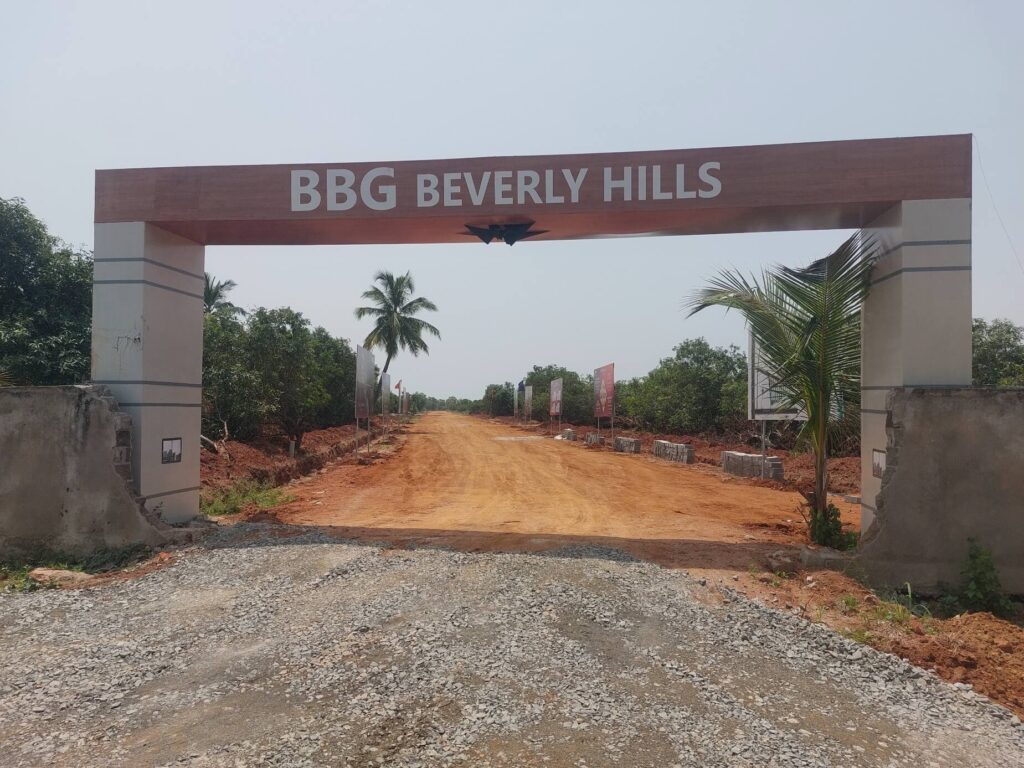
If you’re exploring VMRDA-approved plotted developments in the Bhogapuram airport corridor, you may find these projects useful:
A premium gated community located in the broader Bhogapuram growth corridor, offering VMRDA-approved plots with planned infrastructure and connectivity.
A VMRDA-approved plotted development designed for buyers seeking opportunities within the airport influence zone.
Expert Insight
Successful real estate investing is rarely about identifying a single “best” location.
Instead, it involves selecting a location where infrastructure, legal compliance, accessibility, and long-term planning come together.
Bhogapuram International Airport has created new opportunities across North Andhra, but informed buyers should evaluate each location based on its individual strengths rather than relying on distance from the airport alone.
Key Takeaways
- The Bhogapuram airport corridor includes several promising locations, each with different strengths and characteristics.
- Buyers should evaluate connectivity, approvals, infrastructure, and long-term usability rather than focusing only on proximity to the airport.
- Areas such as Bhogapuram, Bheemunipatnam, Thagarapuvalasa, Anandapuram, Madhurawada, Vizianagaram, and the Srikakulam corridor each serve different buyer needs.
- VMRDA approval, legal verification, and developer credibility remain essential considerations regardless of the chosen location.
- The most suitable location depends on your objectives, whether they are residential use, long-term investment, retirement, or commercial development.
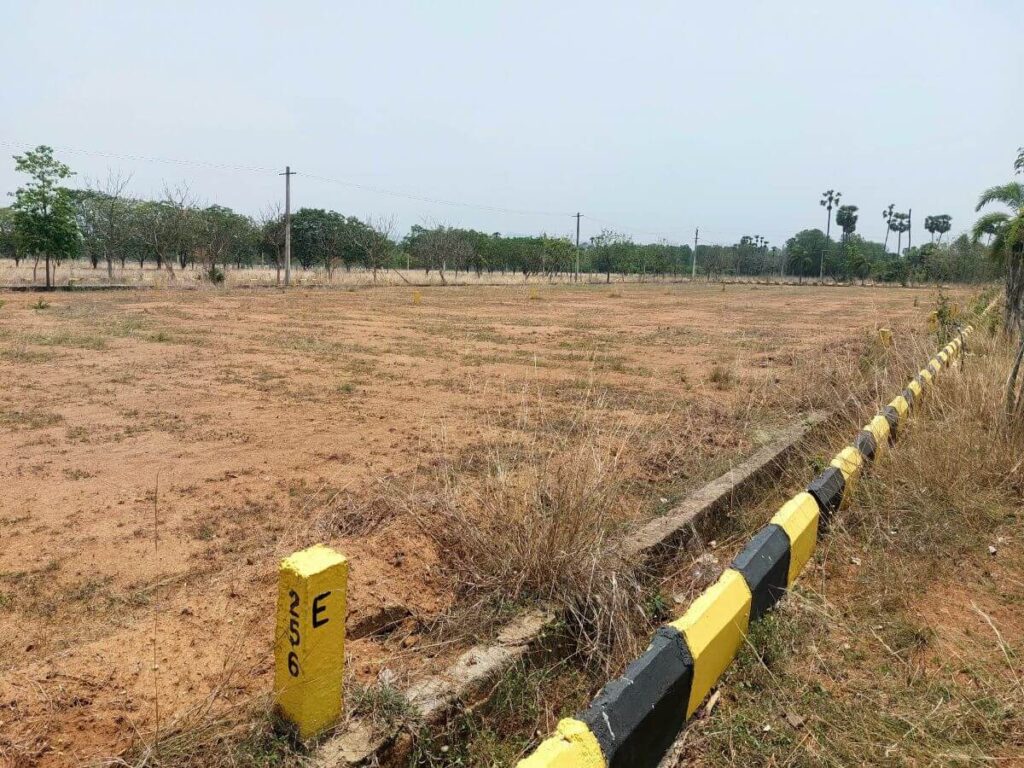
Government Infrastructure Projects Supporting Bhogapuram International Airport
An international airport delivers its greatest benefits when it is supported by a strong network of roads, ports, industries, tourism facilities, and urban infrastructure.
Recognising this, the Government of Andhra Pradesh and various central agencies are implementing and planning multiple infrastructure projects that complement Bhogapuram International Airport. Together, these initiatives aim to improve connectivity, encourage investment, strengthen logistics, and support long-term economic growth across North Andhra.
Rather than viewing the airport as an isolated project, it is more accurate to see it as the centrepiece of a broader regional development strategy.
National Highway 16 (NH-16)
One of the airport’s greatest advantages is its proximity to National Highway 16 (NH-16), one of India’s busiest highway corridors and part of the Golden Quadrilateral.
NH-16 connects:
- Chennai
- Nellore
- Vijayawada
- Rajahmundry
- Visakhapatnam
- Bhogapuram
- Vizianagaram
- Srikakulam
- Bhubaneswar
- Kolkata
Because the airport is located close to NH-16, passengers, cargo operators, tourists, and businesses can access it more efficiently from across the region.
Why NH-16 Matters
- Faster road connectivity.
- Reduced travel times.
- Improved cargo transportation.
- Better access for tourists.
- Stronger regional integration.
Airport Approach Roads
To improve accessibility, the Andhra Pradesh Government has undertaken several road improvement initiatives around the airport.
These include:
- New airport approach roads.
- Upgraded junctions.
- Additional highway connections.
- Road widening projects.
- Better traffic management infrastructure.
The objective is to ensure smooth movement of passengers, airport staff, freight vehicles, and emergency services while supporting future traffic growth.
Beach Corridor Road
The proposed Beach Corridor Road is intended to strengthen connectivity between Visakhapatnam’s coastal areas and the Bhogapuram airport corridor.
Potential benefits include:
- Faster access from Bheemunipatnam.
- Improved tourism connectivity.
- Better access to beach destinations.
- Support for coastal economic development.
If implemented as planned, the corridor could enhance travel convenience for both residents and visitors.
Bhogapuram Aerocity
One of the most ambitious developments associated with the airport is the proposed Bhogapuram Aerocity, planned by GMR.
The Aerocity concept extends the airport’s role beyond aviation by creating a mixed-use urban ecosystem.
Planned components include:
- Commercial office spaces.
- Hotels.
- Convention centres.
- Retail districts.
- Residential neighbourhoods.
- Logistics parks.
- Aerospace and aviation-related industries.
- Research and innovation facilities.
- Skill development and training centres.
Aerocity developments at other major airports have demonstrated how aviation infrastructure can encourage broader business and urban growth over the long term.
Visakhapatnam–Chennai Industrial Corridor (VCIC)
Bhogapuram International Airport also complements the Visakhapatnam–Chennai Industrial Corridor (VCIC), one of India’s major industrial development initiatives.
The corridor is intended to:
- Improve industrial competitiveness.
- Encourage manufacturing.
- Strengthen exports.
- Attract domestic and international investment.
- Enhance logistics infrastructure.
An international airport can support these objectives by improving business travel and facilitating time-sensitive cargo movement.
Visakhapatnam Port Connectivity
The airport’s proximity to Visakhapatnam Port, one of India’s leading ports on the east coast, creates opportunities for multimodal transport.
Together, the airport, port, and highway network can support:
- Export-oriented industries.
- Import logistics.
- Marine products.
- Pharmaceuticals.
- Engineering goods.
- Supply chain efficiency.
This combination enhances North Andhra’s role as an important logistics and trade region.
Tourism Infrastructure
Tourism is another sector expected to benefit from improved air connectivity.
North Andhra offers attractions such as:
- RK Beach
- Bheemunipatnam Beach
- Yarada Beach
- Araku Valley
- Borra Caves
- Buddhist heritage sites
- Tribal tourism destinations
Improved airport access, combined with road development and hospitality investment, can make these destinations more accessible to domestic and international visitors.
Urban Development
Infrastructure projects often influence the pattern of urban expansion.
As connectivity improves, surrounding areas may experience gradual growth in:
- Residential neighbourhoods.
- Commercial establishments.
- Educational institutions.
- Healthcare facilities.
- Retail centres.
- Public services.
The pace of development will depend on planning policies, private investment, and market demand.
Utilities and Civic Infrastructure
Roads alone are not enough to support long-term growth.
Government agencies continue to improve supporting infrastructure, including:
- Water supply.
- Power distribution.
- Drainage systems.
- Street lighting.
- Digital connectivity.
- Public transport.
These improvements contribute to creating more liveable communities around the airport corridor.
Future Public Transport
As passenger numbers increase, public transport connectivity is expected to expand.
Potential future improvements may include:
- Additional APSRTC services.
- Electric bus connectivity.
- Airport shuttle services.
- Integrated transport planning with regional road networks.
Any future rail- or metro-based connections would depend on government approvals and feasibility studies.
How These Projects Work Together
Individually, each infrastructure project provides specific benefits.
Collectively, they create an integrated development ecosystem.
For example:
- Airport → Air connectivity.
- NH-16 → Regional road access.
- Visakhapatnam Port → Maritime trade.
- VCIC → Industrial growth.
- Aerocity → Commercial and urban development.
- Tourism infrastructure → Visitor economy.
- Utility upgrades → Better quality of life.
This coordinated approach has the potential to strengthen North Andhra’s long-term competitiveness.
Why This Matters for Property Buyers
Infrastructure projects often improve accessibility and create opportunities for future development.
However, purchasing property should always involve careful evaluation of:
- VMRDA approvals.
- Legal documentation.
- Existing infrastructure.
- Developer credibility.
- Road connectivity.
- Long-term land use.
A well-planned location with strong civic infrastructure is generally more desirable than a location chosen solely because it is close to a major project.
Expert Insight
Around the world, successful airport regions are rarely built around aviation alone.
They succeed because airports are integrated with highways, ports, industrial parks, tourism, housing, and commercial development.
Bhogapuram International Airport appears to be following this integrated planning approach. While the long-term outcomes will depend on continued public and private investment, the combination of transport, industry, and urban infrastructure provides a strong foundation for future regional growth.
Frequently Asked Questions
Is Bhogapuram Airport the only major infrastructure project in the region?
No. It is part of a wider network that includes NH-16 improvements, airport approach roads, the proposed Aerocity, the Visakhapatnam–Chennai Industrial Corridor, tourism initiatives, and connectivity with Visakhapatnam Port.
Will all planned infrastructure be completed immediately?
Large infrastructure projects are generally implemented in phases over several years. Timelines may change based on funding, approvals, construction progress, and government priorities.
Why is integrated infrastructure important?
When airports, highways, ports, industries, and public services develop together, they can create stronger economic opportunities than any single project alone.
Key Takeaways
- Bhogapuram International Airport is supported by a broader network of infrastructure projects rather than functioning as a standalone development.
- NH-16, airport approach roads, Visakhapatnam Port, the Visakhapatnam–Chennai Industrial Corridor, and the proposed Bhogapuram Aerocity together strengthen regional connectivity.
- Tourism, logistics, manufacturing, and commercial activity are expected to benefit as supporting infrastructure continues to develop.
- Buyers and investors should evaluate the complete infrastructure ecosystem alongside legal approvals and project quality before making property decisions.
- The combination of aviation, transport, industry, and urban planning provides a strong foundation for North Andhra’s long-term development.
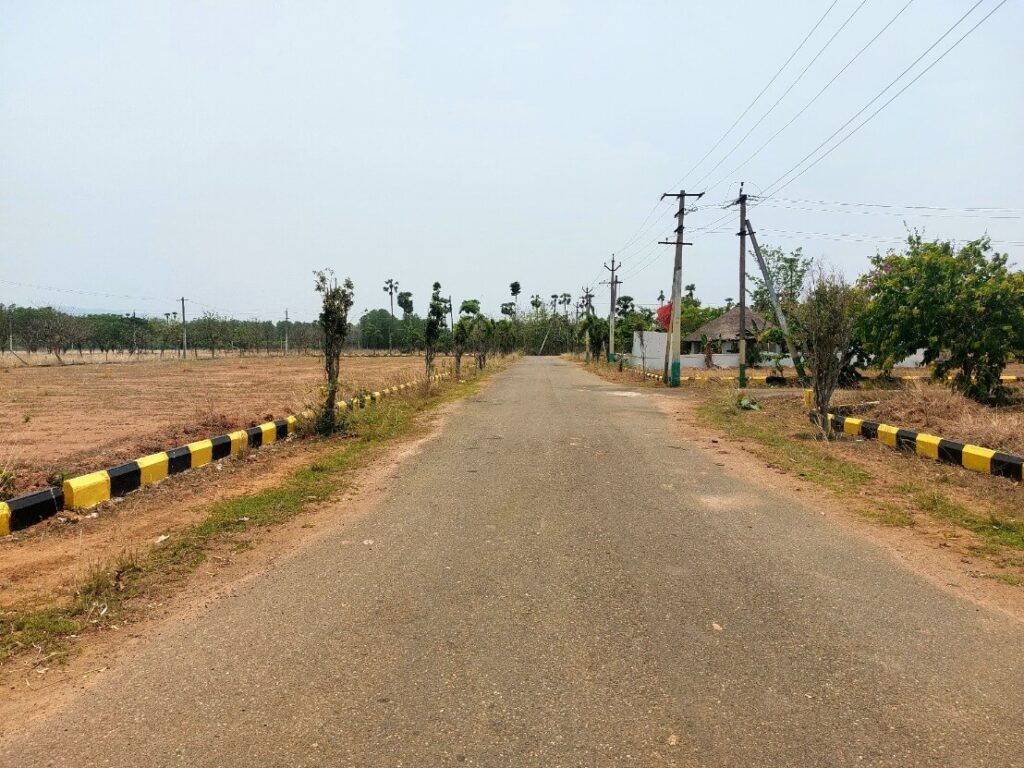
Bhogapuram International Airport and the VMRDA Growth Corridor
The development of Bhogapuram International Airport is not an isolated infrastructure project. It forms part of the broader urban and regional planning strategy overseen by the Visakhapatnam Metropolitan Region Development Authority (VMRDA).
As North Andhra continues to grow, VMRDA plays a key role in guiding planned urban expansion, transportation networks, residential layouts, commercial zones, and public infrastructure. The airport complements this long-term vision by improving regional connectivity and supporting balanced development across the metropolitan region.
Understanding how the airport fits within the VMRDA Growth Corridor can help homebuyers and investors better appreciate the broader planning context.
What is VMRDA?
The Visakhapatnam Metropolitan Region Development Authority (VMRDA) is the statutory planning authority responsible for preparing development plans and regulating planned growth across the Visakhapatnam Metropolitan Region.
Its responsibilities include:
- Urban planning
- Master plans
- Land-use regulation
- Layout approvals
- Transportation planning
- Infrastructure coordination
- Environmental considerations
- Balanced regional development
VMRDA aims to ensure that growth occurs in an organised manner while supporting sustainable development.
Understanding the VMRDA Growth Corridor
A growth corridor is an area where infrastructure improvements, transportation projects, employment centres, and urban planning combine to encourage future development.
Within the Visakhapatnam Metropolitan Region, several growth corridors have emerged due to:
- NH-16
- Bhogapuram International Airport
- Industrial development
- Educational institutions
- Tourism infrastructure
- Expanding residential demand
- Improved road connectivity
The northern corridor connecting Visakhapatnam with Bhogapuram and Vizianagaram is one of the most closely watched areas because multiple infrastructure initiatives are converging there.
How Bhogapuram Airport Fits into the VMRDA Vision
Modern metropolitan planning seeks to distribute growth across multiple areas instead of concentrating all development within one city centre.
Bhogapuram International Airport supports this objective by:
- Improving regional accessibility.
- Encouraging decentralised growth.
- Supporting new commercial opportunities.
- Strengthening tourism.
- Improving logistics connectivity.
- Complementing industrial development.
- Enhancing regional mobility.
Rather than replacing Visakhapatnam’s existing urban centre, the airport is expected to support the continued expansion of the metropolitan region.
North Visakhapatnam Expansion
Over the past decade, Visakhapatnam has expanded steadily towards the north.
Areas such as:
- Madhurawada
- Anandapuram
- Thagarapuvalasa
- Bheemunipatnam
- Bhogapuram
have experienced increasing residential and infrastructure development.
Several factors have contributed to this trend:
- Availability of land.
- Improved highways.
- Educational institutions.
- Healthcare facilities.
- Tourism development.
- Airport project.
- Government infrastructure investments.
This gradual northward expansion aligns with the broader planning objectives of creating multiple urban growth centres.
Why VMRDA-Approved Layouts Matter
For anyone considering purchasing land within the airport corridor, VMRDA approval is one of the most important factors to verify.
VMRDA-approved layouts generally comply with planning standards relating to:
- Road widths
- Open spaces
- Drainage planning
- Public utility provisions
- Layout design
- Development regulations
However, buyers should remember that layout approval is only one part of the due diligence process. Independent legal verification, title checks, and site inspections remain essential before making any purchase.
Planned Infrastructure Supports Planned Growth
Infrastructure projects often reinforce one another.
For example:
- Airport → Better regional connectivity.
- NH-16 → Faster road transport.
- Urban roads → Improved accessibility.
- Educational institutions → Residential demand.
- Healthcare facilities → Community development.
- Commercial centres → Employment opportunities.
When these elements develop together, they create conditions that support balanced urban expansion over time.
Airport Influence Within the Metropolitan Region
The influence of Bhogapuram International Airport is expected to extend beyond the immediate airport site.
Areas likely to benefit from improved connectivity include:
Bhogapuram
Immediate airport corridor with significant infrastructure focus.
Thagarapuvalasa
A strategic transport junction connecting multiple growth corridors.
Bheemunipatnam
A coastal town with tourism, residential, and lifestyle appeal.
Anandapuram
A growing residential area with access to educational and healthcare infrastructure.
Madhurawada
An established urban extension offering strong civic amenities.
Vizianagaram
A district headquarters expected to benefit from improved regional accessibility.
The pace and extent of development in these areas will depend on planning policies, infrastructure delivery, market demand, and private investment.
Airport-Led Urban Planning
Around the world, airports often influence how cities grow.
Rather than expanding randomly, planners increasingly encourage:
- Mixed-use development.
- Integrated transportation.
- Residential communities.
- Commercial districts.
- Industrial zones.
- Public open spaces.
- Sustainable infrastructure.
Bhogapuram International Airport has the potential to support similar planning principles as the surrounding region evolves.
Why This Matters for Homebuyers
Understanding the VMRDA Growth Corridor helps buyers evaluate property from a long-term planning perspective rather than focusing only on today’s conditions.
Questions worth considering include:
- Is the layout VMRDA approved?
- Is the surrounding infrastructure improving?
- Does the location have good road access?
- Are schools and hospitals nearby?
- Is the area part of a planned growth corridor?
- Does the property suit my intended use?
Taking these factors into account can lead to more informed property decisions.
Why This Matters for Investors
For investors, metropolitan planning provides important context.
Rather than evaluating a property solely based on its distance from the airport, it is useful to consider:
- Transportation networks.
- Urban expansion.
- Employment centres.
- Government planning.
- Infrastructure investment.
- Long-term demand drivers.
This broader perspective often provides a better understanding of an area’s future potential.
Expert Insight
Successful metropolitan regions rarely grow because of a single project.
Instead, growth is typically driven by the interaction of transport infrastructure, urban planning, employment opportunities, public services, and private investment.
Bhogapuram International Airport represents one important component of this broader development strategy. When viewed alongside VMRDA planning, it becomes clear that the airport is intended to support long-term regional development rather than simply provide additional air connectivity.
Frequently Asked Questions
Is every area within the VMRDA region expected to develop at the same pace?
No. Different areas develop at different rates depending on infrastructure, planning, demand, and investment.
Does VMRDA approval guarantee future appreciation?
No. VMRDA approval indicates compliance with planning regulations, but future property values depend on many economic and market factors.
Why is the VMRDA Growth Corridor important?
It helps buyers understand how infrastructure, transport, and planned development work together to shape the future of the metropolitan region.
Key Takeaways
- Bhogapuram International Airport forms part of the broader VMRDA planning framework for North Andhra.
- The northern growth corridor of the Visakhapatnam Metropolitan Region continues to attract infrastructure investment and planned urban development.
- Buyers should consider VMRDA approvals, road connectivity, civic infrastructure, and long-term planning when evaluating property.
- Airport-led growth is most effective when supported by integrated transportation, urban planning, and public infrastructure.
- Understanding the VMRDA Growth Corridor helps buyers and investors make more informed long-term decisions.
Bhogapuram International Airport vs Other Major Indian Airports: A Comparison
Bhogapuram International Airport is one of India’s newest greenfield international airports. While every airport serves a unique region with different economic and geographic characteristics, comparing Bhogapuram with other successful airport projects helps us understand its long-term vision and potential.
Rather than asking whether Bhogapuram will become “the next Hyderabad” or “the next Bengaluru,” a better question is:
“What lessons can Bhogapuram learn from other successful airport developments?”
This section compares Bhogapuram with some of India’s most important greenfield airports.
Quick Comparison
| Airport | State | Initial Passenger Capacity | Runway | Key Strength |
|---|---|---|---|---|
| Bhogapuram International Airport | Andhra Pradesh | 6 million/year | 3,800 m | Airport + Aerocity + North Andhra Gateway |
| Rajiv Gandhi International Airport | Telangana | Expanded over time to major hub | Multiple runways/expansion | IT & global connectivity |
| Kempegowda International Airport | Karnataka | Expanded in phases | Multiple runway system | Technology, cargo & aerospace |
| Manohar International Airport (Mopa) | Goa | Planned phased expansion | Modern international runway | Tourism-focused development |
| Navi Mumbai International Airport | Maharashtra | 20 million/year (Phase 1) | Designed for all aircraft | Multi-modal transport hub |
| Noida International Airport (Jewar) | Uttar Pradesh | Planned phased development | Multiple expansion phases | NCR capacity & logistics |
Bhogapuram’s first phase is designed for 6 million passengers annually, with future phases increasing capacity to 12 million and ultimately 18 million passengers per year.
Bhogapuram vs Hyderabad (Rajiv Gandhi International Airport)
Hyderabad’s airport is widely regarded as one of India’s most successful airport developments.
What Made Hyderabad Successful?
- World-class airport infrastructure.
- Strong IT industry growth.
- Outer Ring Road connectivity.
- Pharmaceutical industry.
- International business travel.
- Planned commercial development.
Lessons for Bhogapuram
Bhogapuram cannot replicate Hyderabad overnight, but it can benefit from similar planning principles:
- Integrated transport.
- Commercial development.
- Cargo growth.
- Tourism.
- Long-term phased expansion.
The key lesson is that supporting infrastructure and economic activity are just as important as the airport itself.
Bhogapuram vs Bengaluru (Kempegowda International Airport)
Kempegowda International Airport transformed North Bengaluru into one of India’s fastest-growing business corridors.
Growth was supported by:
- Aerospace industries.
- Technology parks.
- Warehousing.
- Hotels.
- Residential townships.
- Improved highways.
- Metro expansion.
Lessons for Bhogapuram
Bhogapuram also has opportunities in:
- Logistics.
- Tourism.
- Aerospace support services.
- Hospitality.
- Residential development.
However, Bengaluru’s success resulted from decades of investment across multiple sectors, not from the airport alone.
Bhogapuram vs Mopa (Goa)
Manohar International Airport (Mopa) is another modern greenfield airport developed with long-term tourism growth in mind.
Similarities
- Greenfield airport.
- Phased development.
- Regional economic focus.
- Modern passenger facilities.
Differences
Mopa primarily serves Goa’s tourism industry, whereas Bhogapuram is expected to support a broader mix of tourism, logistics, trade, manufacturing, and regional connectivity.
Bhogapuram vs Navi Mumbai International Airport
Navi Mumbai International Airport has been developed to reduce congestion at Mumbai while creating a new aviation hub supported by metro, rail, roads, waterways, and expressways.
Phase 1 has been designed for approximately 20 million passengers annually, with long-term expansion to around 90 million passengers.
Lessons for Bhogapuram
- Multi-modal transport planning.
- Phased expansion.
- Integrated commercial development.
- Long-term master planning.
While Bhogapuram serves a much smaller market, the planning philosophy is similar: build infrastructure that can expand as demand grows.
Bhogapuram vs Noida International Airport (Jewar)
Jewar Airport has been planned to support the rapidly growing National Capital Region (NCR).
Its master plan includes:
- Multiple future runways.
- Large-scale cargo facilities.
- Logistics parks.
- Industrial development.
- Phased passenger expansion.
Lessons for Bhogapuram
Jewar demonstrates how airport planning can be integrated with industrial corridors and logistics infrastructure. Bhogapuram follows a comparable approach on a regional scale through its connection with the Visakhapatnam–Chennai Industrial Corridor (VCIC) and the proposed Bhogapuram Aerocity.
What Makes Bhogapuram Unique?
Although comparisons are useful, Bhogapuram has several characteristics that distinguish it from other airports.
Strategic Advantages
- Gateway to North Andhra.
- Direct access to NH-16.
- Proximity to Visakhapatnam Port.
- Planned Aerocity.
- Strong tourism potential.
- Regional cargo opportunities.
- Availability of land for future expansion.
These strengths position Bhogapuram as a regional aviation and development hub rather than simply an additional airport.
Airport Development Is a Long-Term Journey
One common feature shared by Hyderabad, Bengaluru, Mopa, Navi Mumbai, Jewar, and Bhogapuram is phased growth.
None of these airports reached their full potential immediately after opening.
Instead, they expanded over time as:
- Passenger traffic increased.
- Airlines added routes.
- Infrastructure improved.
- Businesses invested.
- Cities expanded.
Bhogapuram is expected to follow a similar long-term development path, with future growth depending on passenger demand, airline expansion, government infrastructure, and private investment.
Comparison of Development Focus
| Airport | Primary Growth Driver |
|---|---|
| Hyderabad | IT, pharmaceuticals, international business |
| Bengaluru | Technology, aerospace, logistics |
| Mopa | Tourism |
| Navi Mumbai | Metro region expansion and logistics |
| Jewar | NCR growth and cargo |
| Bhogapuram | Regional connectivity, tourism, logistics, industrial growth, Aerocity |
This comparison highlights that every airport develops according to the strengths of its surrounding region.
What Buyers and Investors Can Learn
Looking at successful airport developments across India provides several practical lessons:
- Airports influence development gradually.
- Connectivity is as important as proximity.
- Supporting infrastructure matters.
- Planned urban growth creates long-term opportunities.
- Legal approvals remain essential for property buyers.
- Diversified regional economies generally support sustainable growth.
Rather than expecting immediate transformation, buyers should evaluate long-term planning and infrastructure trends.
Expert Insight
Bhogapuram International Airport should not be measured against today’s Hyderabad or Bengaluru.
A more meaningful comparison is with their early stages, when those airports were new and the surrounding infrastructure was still evolving.
The success of Bhogapuram will depend on how effectively aviation, transport, tourism, logistics, industry, and urban planning develop together over the coming decades.
Frequently Asked Questions
Is Bhogapuram Airport larger than Hyderabad Airport?
No. Hyderabad is an established international hub that has expanded significantly over many years. Bhogapuram is beginning with a smaller first phase and has been designed for phased expansion.
Will Bhogapuram become another Bengaluru?
Every airport serves a different market. Bhogapuram’s future will depend on North Andhra’s economic growth, tourism, logistics, airline expansion, and supporting infrastructure rather than following another city’s exact path.
Why compare airports?
Comparisons help readers understand planning strategies, phased development, and the broader role airports play in regional growth.
Key Takeaways
- Bhogapuram International Airport follows the same phased greenfield development approach adopted by several successful airports in India.
- Hyderabad, Bengaluru, Mopa, Navi Mumbai, and Jewar demonstrate that airport-led development is strongest when combined with highways, industries, logistics, tourism, and planned urban expansion.
- Bhogapuram’s unique strengths include its location in North Andhra, proximity to NH-16 and Visakhapatnam Port, and the planned Bhogapuram Aerocity.
- The airport should be evaluated based on its own regional role rather than direct comparisons with much larger metropolitan airports.
- Long-term success will depend on continued investment in infrastructure, transport, business, and urban development.
Investment Checklist: What to Verify Before Buying a Plot Near Bhogapuram International Airport
Buying a plot is one of the biggest financial decisions most people make. While the development of Bhogapuram International Airport has attracted significant interest to North Andhra, a successful property purchase depends on much more than proximity to the airport.
Whether you are an end-user, first-time buyer, NRI, or long-term investor, conducting proper due diligence is essential.
This checklist will help you evaluate a plot more confidently before making a purchase.
- Verify VMRDA Approval
One of the first things to check is whether the layout has been approved by the Visakhapatnam Metropolitan Region Development Authority (VMRDA).
A VMRDA-approved layout generally follows planning regulations relating to roads, open spaces, and infrastructure.
Ask for:
- LP Number (Layout Permission Number)
- Approved layout plan
- Copy of the approval order
Always verify these documents independently if possible.
- Confirm Clear Legal Title
Ensure the seller has a clear and marketable title to the property.
Important documents include:
- Title Deed
- Link Documents
- Sale Deeds
- Pattadar records (where applicable)
- Mutation records
If necessary, consult an experienced property lawyer before proceeding.
- Obtain an Encumbrance Certificate (EC)
An Encumbrance Certificate (EC) helps identify whether the property has recorded transactions or registered encumbrances during the selected period.
Review the EC carefully for:
- Ownership history
- Registered mortgages
- Sale transactions
- Other registered encumbrances
An EC is important, but it should be reviewed along with the complete title documents.
- Check Land Use and Zoning
Verify that the land use matches your intended purpose.
For example:
- Residential
- Commercial
- Mixed-use
- Institutional
- Industrial
Purchasing land without understanding zoning regulations may create future complications.
- Confirm Physical Boundaries
Never rely only on brochures or online maps.
Visit the site and verify:
- Survey stones
- Plot dimensions
- Boundary markings
- Road access
- Surrounding development
A physical inspection helps avoid misunderstandings.
- Verify Road Access
Ask questions such as:
- Is there a proper approach road?
- Is the internal road completed?
- What is the road width?
- Does the road connect to major highways?
Accessibility significantly affects the usability of a property.
- Evaluate Infrastructure
Check the availability or planned provision of:
- Electricity
- Water supply
- Drainage
- Street lighting
- Underground utilities
- Parks and open spaces
Infrastructure contributes to long-term livability and convenience.
- Research the Developer
Before purchasing in a plotted development, learn about the developer.
Consider:
- Previous projects
- Delivery history
- Reputation
- Customer reviews
- Transparency
- Documentation quality
Choosing an established developer can reduce uncertainty.
- Review the Layout Plan
Study the approved layout carefully.
Look for:
- Road network
- Plot orientation
- Open spaces
- Parks
- Utility areas
- Community facilities
A well-planned layout often provides better long-term usability.
- Understand the Surrounding Area
Visit the locality at different times of the day if possible.
Observe:
- Nearby residential development
- Schools
- Hospitals
- Shopping facilities
- Public transport
- General neighbourhood activity
Understanding the surrounding environment helps you evaluate the property’s practical appeal.
- Assess Connectivity
Good connectivity often matters more than being the closest plot to the airport.
Evaluate access to:
- NH-16
- Bhogapuram International Airport
- Visakhapatnam
- Vizianagaram
- Bheemunipatnam
- Thagarapuvalasa
Convenient road connectivity supports both residential use and future accessibility.
- Understand the Purpose of Your Purchase
Ask yourself:
- Am I buying to build a home?
- Is this a long-term investment?
- Do I plan to retire here?
- Is rental income important?
- Am I purchasing for future generations?
Your objective should guide your decision.
- Avoid Buying Based on Rumours
Infrastructure projects often generate speculation.
Avoid making decisions based solely on:
- “Prices will double.”
- “A metro is definitely coming.”
- “A new IT park has already been approved.”
- “Everyone is buying here.”
Instead, rely on official announcements, verified documents, and your own research.
- Estimate the Total Cost
Your budget should include more than the plot price.
Consider:
- Stamp duty
- Registration charges
- Legal fees
- Development charges (if applicable)
- Site visit expenses
- Future construction costs
Planning for the full cost helps avoid surprises later.
- Think Long Term
Real estate is generally a long-term investment.
Ask yourself:
- Does this location fit my goals?
- Is the infrastructure improving?
- Is the project legally sound?
- Am I comfortable holding this investment for several years?
Patience and proper planning often contribute to better outcomes than short-term speculation.
Common Red Flags
Exercise caution if you encounter any of the following:
- Unclear ownership documents.
- Missing approvals.
- Verbal promises without written evidence.
- Layout plans that differ from approvals.
- No physical road access.
- Unrealistic return guarantees.
- Incomplete documentation.
If something seems uncertain, seek independent legal advice before proceeding.
Quick Buyer Checklist
Before purchasing, make sure you can answer “Yes” to these questions:
| Checklist Item | Yes / No |
|---|---|
| Is the layout VMRDA approved? | ☐ |
| Have I verified the LP Number? | ☐ |
| Have I reviewed the title documents? | ☐ |
| Have I obtained an Encumbrance Certificate? | ☐ |
| Have I visited the site? | ☐ |
| Is there proper road access? | ☐ |
| Have I checked surrounding infrastructure? | ☐ |
| Have I researched the developer? | ☐ |
| Does the property suit my purpose? | ☐ |
| Have I consulted a legal professional if needed? | ☐ |
Why This Checklist Matters
The excitement surrounding a major infrastructure project like Bhogapuram International Airport should never replace careful due diligence.
By verifying approvals, documents, infrastructure, and connectivity, buyers can make more informed decisions and reduce avoidable risks.
A well-researched purchase is usually more valuable than a hurried one.
Expert Insight
Successful property investors often spend more time evaluating documentation than comparing prices.
Legal clarity, planning approvals, infrastructure quality, and long-term usability generally have a greater influence on the quality of an investment than promotional claims.
Taking time to verify these factors can help buyers make decisions with greater confidence.
Frequently Asked Questions
Is buying near the airport enough?
No. The airport is only one factor. Buyers should also consider approvals, legal documentation, infrastructure, connectivity, and their own investment objectives.
Does VMRDA approval guarantee appreciation?
No. VMRDA approval indicates that the layout complies with planning regulations, but future property values depend on market conditions, infrastructure, demand, and many other factors.
Should I consult a lawyer before buying a plot?
For most buyers, especially when making a significant investment, obtaining independent legal advice is a prudent step before completing the purchase.
Key Takeaways
- Buying a plot near Bhogapuram International Airport requires thorough due diligence beyond simply considering the location.
- Verify VMRDA approval, title documents, the Encumbrance Certificate, road access, infrastructure, and developer credibility before purchasing.
- Avoid making investment decisions based on rumours or promises of guaranteed returns.
- Align your purchase with your personal objectives, whether they are residential use, long-term investment, or retirement planning.
- A systematic checklist can help reduce risk and support more informed property decisions.
Common Myths and Facts About Bhogapuram International Airport
Whenever a major infrastructure project is announced, it often generates excitement, speculation, and misinformation. Bhogapuram International Airport is no exception.
While the airport has created new opportunities for North Andhra, it has also led to many assumptions about property prices, infrastructure, and future development.
This section separates common myths from verified facts to help buyers and investors make informed decisions.
Myth 1: Every Plot Near the Airport Will Double in Value
Fact
There is no guarantee that every property near an airport will experience the same level of appreciation.
Several factors influence land values, including:
- VMRDA approval
- Road connectivity
- Infrastructure
- Legal clarity
- Demand
- Developer reputation
- Surrounding development
Two plots located only a few kilometres apart may perform very differently over time.
Takeaway: Evaluate the quality of the project—not just its distance from the airport.
Myth 2: The Closer the Plot, the Better the Investment
Fact
Proximity alone does not determine investment quality.
In some cases, a slightly farther location with:
- Better roads
- Established infrastructure
- Clear legal documentation
- Planned development
may be a better choice than an unapproved plot immediately adjacent to the airport.
Takeaway: Connectivity and planning often matter more than simple distance.
Myth 3: Visakhapatnam Airport Will Shut Down
Fact
The existing Visakhapatnam Airport is expected to continue operating until commercial operations transition to Bhogapuram. Future decisions regarding defence and civil aviation operations will be taken by the relevant authorities.
The new airport is being developed to address future passenger growth and operational requirements, not simply to replace existing infrastructure overnight.
Takeaway: Airport transitions are typically planned and phased.
Myth 4: Bhogapuram Airport Is Only for International Flights
Fact
No.
Like most international airports, Bhogapuram will handle both:
- Domestic flights
- International flights
Domestic connectivity is expected to remain an important part of airport operations.
Takeaway: The airport is designed to serve multiple categories of passengers.
Myth 5: The Entire Region Will Transform Immediately
Fact
Large infrastructure projects create change gradually.
Development usually occurs in phases as:
- Roads improve
- Businesses invest
- Residential demand increases
- Public infrastructure expands
- Commercial activity grows
Transformation takes years rather than months.
Takeaway: Long-term planning is more realistic than expecting instant change.
Myth 6: Buying Any Land Near the Airport Is Safe
Fact
Not all land is suitable for purchase.
Buyers should verify:
- Ownership
- VMRDA approval
- Title documents
- Land use
- Road access
- Encumbrance Certificate
- Physical boundaries
Infrastructure projects do not eliminate the need for proper legal verification.
Takeaway: Due diligence remains essential.
Myth 7: Airport Projects Guarantee High Returns
Fact
No infrastructure project can guarantee investment returns.
Property performance depends on many factors, including:
- Market conditions
- Infrastructure delivery
- Government policies
- Economic growth
- Buyer demand
- Project quality
Responsible investing involves evaluating all these factors rather than relying on promises.
Takeaway: Be cautious of guaranteed-return claims.
Myth 8: VMRDA Approval Alone Is Enough
Fact
VMRDA approval is an important planning approval, but buyers should also verify:
- Legal title
- Encumbrance Certificate
- Survey details
- Registration records
- Physical inspection
- Developer credibility
Approval is one part of a comprehensive due diligence process.
Takeaway: Combine planning verification with legal verification.
Myth 9: Only Investors Benefit From the Airport
Fact
The airport is expected to benefit multiple groups, including:
- Residents
- Tourists
- Students
- Businesses
- Logistics companies
- Exporters
- Professionals
- Homebuyers
Improved connectivity has the potential to support broader regional development rather than benefiting investors alone.
Takeaway: Airports contribute to economic and social development in many ways.
Myth 10: Airport Noise Will Affect the Entire Region
Fact
Aircraft noise is generally greatest close to flight paths and airport operations.
Many residential areas located within the broader airport corridor may experience little or no significant operational impact.
Planning authorities also consider aviation safety and land-use regulations when approving development around airports.
Takeaway: The impact varies depending on the exact location.
Myth 11: Buying Early Always Means Higher Profits
Fact
Buying early can offer advantages, but timing alone does not determine success.
A successful purchase depends on:
- Project quality
- Legal compliance
- Infrastructure
- Location
- Market demand
- Holding period
Early entry without proper research can increase risk.
Takeaway: Research is more important than rushing.
Myth 12: All Airport Corridors Grow in the Same Way
Fact
Every airport serves a different region with unique characteristics.
Growth depends on:
- Local economy
- Industry
- Tourism
- Population
- Infrastructure
- Government planning
Bhogapuram’s development will reflect the strengths and opportunities of North Andhra rather than following another city’s exact path.
Takeaway: Evaluate Bhogapuram on its own merits.
Myth vs Fact Summary
| Myth | Reality |
|---|---|
| Every plot will appreciate equally | Property performance varies by location and project quality |
| Closest plot is always best | Connectivity and approvals are equally important |
| Existing Visakhapatnam Airport will close immediately | Airport transitions are generally phased |
| Only international flights will operate | Both domestic and international services are expected |
| Development will happen overnight | Infrastructure-led growth usually occurs over many years |
| Any land near the airport is safe | Legal verification is essential |
| Airport guarantees returns | No investment is risk-free |
| VMRDA approval alone is sufficient | Legal due diligence is also required |
| Only investors benefit | Residents, businesses, tourists, and industries also benefit |
How Buyers Can Avoid Misinformation
When evaluating property near Bhogapuram International Airport:
- Refer to official government announcements.
- Verify project approvals.
- Review legal documents.
- Visit the site personally.
- Consult qualified legal professionals when necessary.
- Avoid relying solely on social media or market rumours.
Taking these steps can help buyers make decisions based on evidence rather than speculation.
Expert Insight
Major infrastructure projects often create excitement, but informed buyers distinguish between expectations and verified information.
The most successful property decisions are typically based on careful research, legal due diligence, infrastructure assessment, and long-term planning—not on rumours or unrealistic promises.
Bhogapuram International Airport has the potential to become an important driver of regional growth, but every investment decision should be evaluated on its own merits.
Frequently Asked Questions
Will Bhogapuram Airport automatically increase all nearby property prices?
No. Property values depend on multiple factors, including approvals, infrastructure, location, demand, and market conditions.
Is VMRDA approval enough before buying?
No. Buyers should also verify legal title, the Encumbrance Certificate, survey details, and other property documents.
Should I rely on social media investment advice?
It is always better to verify information using official sources, project documentation, and professional legal guidance before making a purchase.
Key Takeaways
- Bhogapuram International Airport has created significant opportunities, but buyers should distinguish between verified information and market speculation.
- Distance from the airport alone does not determine a property’s investment potential.
- VMRDA approval is important but should always be accompanied by thorough legal due diligence.
- Infrastructure-led development is typically gradual and depends on multiple economic and planning factors.
- Well-informed decisions based on research and documentation are generally more reliable than decisions driven by rumours or expectations.
Frequently Asked Questions (FAQs) About Bhogapuram International Airport
Below are answers to some of the most common questions asked by travellers, homebuyers, investors, and residents about Bhogapuram International Airport.
General Questions
- What is Bhogapuram International Airport?
Bhogapuram International Airport is a new greenfield international airport being developed in Bhogapuram, Andhra Pradesh, to serve the Visakhapatnam Metropolitan Region and North Andhra.
- Where is Bhogapuram International Airport located?
It is located near Bhogapuram in Vizianagaram district, Andhra Pradesh, along the NH-16 corridor, north of Visakhapatnam.
- Why is a new airport being built?
The new airport is intended to support future passenger growth, improve regional connectivity, strengthen tourism, facilitate cargo movement, and support long-term economic development.
- What does “greenfield airport” mean?
A greenfield airport is built on a new site rather than expanding an existing airport.
- What is the official name of the airport?
The airport has been officially named Alluri Sitarama Raju International Airport.
Construction & Operations
- Who is developing Bhogapuram International Airport?
The airport is being developed by GMR Visakhapatnam International Airport Limited (GVIAL) under a Public-Private Partnership (PPP) model.
- Is the airport operational?
Construction has reached advanced stages. Commercial operations will begin after the completion of regulatory approvals and operational readiness.
- When is the airport expected to open?
The expected opening depends on the completion of construction, regulatory clearances, and operational preparations. Refer to official announcements for the latest updates.
- Will the airport open in phases?
Yes. Passenger capacity and infrastructure are planned to expand in multiple phases as demand grows.
- How many passengers can the airport handle initially?
The first phase has been designed to handle approximately 6 million passengers annually, with provision for future expansion.
Airport Facilities
- Will the airport handle domestic flights?
Yes. Domestic flights are expected to form an important part of airport operations.
- Will there be international flights?
Yes. The airport has been designed to support both domestic and international operations, subject to airline schedules and regulatory approvals.
- Will cargo services be available?
Yes. Cargo facilities are planned to support logistics, exports, and regional industries.
- Will there be parking facilities?
Yes. Modern airport parking facilities are planned for passengers and visitors.
- Will the airport support digital services?
The airport is expected to incorporate modern passenger technologies, including digital check-in and smart airport features.
Connectivity
- How far is the airport from Visakhapatnam?
The airport is approximately 45–50 km from central Visakhapatnam, depending on the starting point and route.
- Is the airport connected to NH-16?
Yes. One of its major advantages is its proximity to National Highway 16.
- Will public transport be available?
Government agencies are expected to expand bus and other transport services as passenger demand increases.
- Is railway connectivity available nearby?
Nearby railway stations and the broader South Coast Railway network will support passenger connectivity to the airport.
- Will taxi services be available?
Yes. Taxi and app-based cab services are expected to operate once commercial services begin.
Real Estate & Investment
- Will the airport increase nearby property values?
Infrastructure projects may influence demand, but property values depend on approvals, location, connectivity, market conditions, and project quality.
- Is Bhogapuram a good place to invest?
Investment suitability depends on individual goals, risk tolerance, legal verification, and the quality of the property being considered.
- Should I buy the closest plot to the airport?
Not necessarily. Connectivity, legal documentation, infrastructure, and VMRDA approval are often more important than distance alone.
- Why are VMRDA-approved plots important?
VMRDA-approved layouts generally comply with planning regulations relating to roads, open spaces, and infrastructure.
- Is legal verification necessary even for approved layouts?
Yes. Buyers should independently verify title documents, the Encumbrance Certificate, and other legal records before purchasing.
Tourism
- How will the airport benefit tourism?
Improved air connectivity can make it easier for visitors to reach destinations such as Araku Valley, Borra Caves, Bheemunipatnam, and Visakhapatnam’s beaches.
- Will international tourism increase?
Improved international connectivity has the potential to support tourism, depending on airline routes and passenger demand.
- Can the airport help local businesses?
Yes. Hotels, restaurants, transport operators, retailers, and tourism-related businesses may benefit from increased visitor activity.
Cargo & Industry
- Why is cargo infrastructure important?
Cargo facilities can support exports, manufacturing, logistics, pharmaceuticals, seafood, agriculture, and other industries.
- Will the airport benefit industries?
Improved air connectivity can strengthen logistics and business travel, supporting industrial development across the region.
Infrastructure
- What is Bhogapuram Aerocity?
Bhogapuram Aerocity is a proposed mixed-use commercial and urban development planned around the airport.
- What is the VCIC?
The Visakhapatnam–Chennai Industrial Corridor (VCIC) is a major industrial development initiative that complements regional infrastructure projects.
- Why is NH-16 important?
NH-16 provides efficient road connectivity between the airport and major cities along India’s east coast.
- How does Visakhapatnam Port complement the airport?
Together, the port and airport support multimodal logistics, trade, and exports.
Planning & Growth
- Is Bhogapuram part of the VMRDA region?
Yes. The airport supports the broader planning objectives of the Visakhapatnam Metropolitan Region.
- What is the VMRDA Growth Corridor?
It refers to areas where planned infrastructure, transportation, and urban development are expected to encourage long-term growth.
- Will all nearby areas develop equally?
No. Development depends on infrastructure, planning, market demand, and private investment.
- Is airport-led development immediate?
No. Major infrastructure projects generally influence development over many years.
Buyers’ Questions
- What documents should I verify before buying a plot?
Important documents include the title deed, sale deed, Encumbrance Certificate, VMRDA approval, layout plan, and related legal records.
- Is an Encumbrance Certificate enough?
No. It should be reviewed together with the complete title and ownership documents.
- Should I visit the site before buying?
Yes. A physical inspection helps verify boundaries, road access, surroundings, and infrastructure.
- Should I consult a lawyer?
Independent legal advice is recommended before making a significant property purchase.
Future Development
- Will the airport expand in the future?
Yes. The master plan provides for phased expansion based on future passenger demand.
- Will more airlines operate from Bhogapuram?
Additional airlines and destinations are expected to be added over time, subject to commercial decisions and regulatory approvals.
- Will more jobs be created?
Airport operations and related industries are expected to generate direct and indirect employment opportunities.
- Will the airport support exports?
Yes. Air cargo facilities can improve export logistics for several industries.
- Can the airport influence regional economic growth?
Improved transportation infrastructure can contribute to tourism, business, logistics, and broader economic activity.
- Is Bhogapuram Airport only important for Vizag?
No. It is expected to serve North Andhra, including parts of Vizianagaram, Srikakulam, and neighbouring regions.
- Where can I find official updates?
The latest information should be obtained from official government announcements, the airport developer, and relevant aviation authorities.
- What is the most important advice for buyers?
Choose properties based on legal clarity, VMRDA approval, infrastructure, connectivity, and your long-term objectives—not on rumours or guaranteed-return claims.
Still Have Questions?
Bhogapuram International Airport is a long-term infrastructure project that will continue to evolve over the coming years. As new information becomes available, this guide will be updated to reflect the latest developments.
If your question isn’t answered above, explore our related guides on:
- VMRDA Approved Plots in Vizag
- VUDA Approved Plots in Vizag
- Mortgage Plots in VUDA/VMRDA Approved Layouts
- Plots in Bhogapuram
- Plots Near Bhogapuram Airport
- Why Invest in Vizag
- Building Blocks Group (BBG)
- BBG Beverly Hills
- Aero Destiny
These resources provide additional information on property buying, infrastructure, approvals, and investment considerations.
Key Takeaways
- Bhogapuram International Airport is a modern greenfield airport designed to improve connectivity, tourism, cargo movement, and regional development.
- Buyers should focus on verified information, legal due diligence, and long-term planning when evaluating property near the airport.
- The airport is expected to benefit residents, businesses, tourists, and industries across North Andhra.
- As the project progresses, airline services, infrastructure, and supporting developments are expected to expand in phases.
- This FAQ section addresses many of the most common questions, helping readers make informed decisions based on facts rather than speculation.
Conclusion: The Future of Bhogapuram International Airport and North Andhra
Bhogapuram International Airport represents one of the most significant infrastructure developments in the history of North Andhra.
Designed as a modern greenfield international airport, it is expected to improve air connectivity, support tourism, strengthen logistics, encourage business travel, and contribute to the long-term economic development of the region. The airport has already achieved major milestones, including receiving its Aerodrome Licence, and authorities are preparing for commercial operations. Recent government announcements indicate that the inauguration is expected on 1 August 2026, subject to final operational arrangements.
However, the airport should not be viewed in isolation.
Its long-term success will depend on the continued development of supporting infrastructure such as highways, airport access roads, the proposed Aerocity, industrial corridors, tourism facilities, utilities, and urban planning. Together, these projects have the potential to strengthen North Andhra as an important destination for business, tourism, and investment.
Looking Ahead: 2026–2040
Over the coming years, Bhogapuram International Airport is expected to evolve through multiple phases.
Potential developments include:
- Expansion of domestic and international flight networks.
- Growth in passenger traffic.
- Development of cargo and logistics facilities.
- Expansion of the proposed Aerocity.
- Increased tourism across North Andhra.
- Greater industrial and commercial investment.
- Additional residential and mixed-use development.
- Continued improvements in regional road connectivity.
The exact pace of these developments will depend on economic conditions, airline demand, infrastructure investment, and government planning.
What This Means for Travellers
For passengers, the airport is expected to provide:
- Modern terminal facilities.
- Improved domestic and international connectivity.
- Better passenger experience.
- Enhanced transport options over time.
- Greater travel convenience for North Andhra.
As airline networks expand, travellers are likely to benefit from increased route choices and improved accessibility.
What This Means for Homebuyers
For families planning to purchase land or build a home, the airport is one part of a much larger picture.
A good property decision should always consider:
- VMRDA approval.
- Clear legal documentation.
- Good road connectivity.
- Reliable civic infrastructure.
- Access to schools and hospitals.
- Long-term suitability for your family’s needs.
Choosing a well-planned location is generally more important than choosing the closest location.
What This Means for Investors
Infrastructure projects often create new opportunities, but successful investing requires patience and careful research.
When evaluating property near Bhogapuram International Airport, investors should focus on:
- Long-term infrastructure trends.
- Government planning.
- Legal compliance.
- Quality of development.
- Accessibility.
- Market demand.
- Holding period.
Rather than relying on speculation, informed decisions should be based on verified information and realistic expectations.
Why We Created This Guide
At VizagPropertys, our objective is to help readers make informed property decisions through accurate, well-researched, and easy-to-understand information.
Whether you are:
- Buying your first plot,
- Investing for the future,
- Planning to build a home,
- Exploring VMRDA-approved layouts, or
- Learning about North Andhra’s infrastructure,
we hope this guide has helped you better understand the opportunities and considerations associated with Bhogapuram International Airport.
Official Sources and References
This guide has been prepared using information from official government agencies, aviation authorities, infrastructure developers, and other reliable public sources, including:
- Ministry of Civil Aviation (Government of India)
- Directorate General of Civil Aviation (DGCA)
- Andhra Pradesh Airports Development Corporation (APADCL)
- GMR Visakhapatnam International Airport Limited (GVIAL)
- Airports Authority of India (AAI)
- Government of Andhra Pradesh
- Visakhapatnam Metropolitan Region Development Authority (VMRDA)
Where recent developments have been discussed, they are based on publicly available official announcements and credible news reports available at the time of writing.
Article Update Policy
Infrastructure projects continue to evolve.
To maintain accuracy, this guide will be reviewed and updated periodically whenever significant developments occur, including:
- Airport operational milestones.
- Airline announcements.
- Infrastructure projects.
- Government policy updates.
- Major transportation improvements.
- Aerocity developments.
- Passenger and cargo expansion.
Last Updated: July 2026
About the Author
VizagPropertys Editorial Team
The VizagPropertys Editorial Team researches and publishes educational content related to:
- VMRDA-approved plots
- Real estate in Visakhapatnam and North Andhra
- Infrastructure projects
- Property buying guides
- Legal awareness for buyers
- Investment education
Our goal is to simplify complex real estate and infrastructure topics so that buyers can make informed decisions based on verified information rather than speculation.
Disclaimer
This article is provided for informational and educational purposes only.
Although every effort has been made to ensure accuracy, infrastructure projects, government policies, airline operations, regulations, and market conditions may change over time.
Readers should verify the latest information with the relevant government authorities and seek independent legal, financial, or professional advice before making property or investment decisions.
Final Thoughts
Bhogapuram International Airport is more than a transportation project—it is part of a broader vision for improving connectivity and supporting the long-term development of North Andhra.
Its full impact will unfold over many years as transport networks, industries, tourism, and urban infrastructure continue to develop.
For travellers, it promises improved accessibility.
For businesses, it offers new opportunities.
For residents, it has the potential to enhance regional connectivity.
And for property buyers, it reinforces the importance of making well-informed decisions based on planning, legal clarity, infrastructure, and long-term objectives.
By staying informed and focusing on verified information, you will be better prepared to make confident decisions in one of Andhra Pradesh’s most important emerging growth corridors.